oluwatosin oyeniyi
 FREETOWN, Sierra Leone — Former Sierra Leone President Ernest Bai Koroma has returned home after more than two years in Nigeria, following the government’s decision to discontinue treason proceedings against him over an alleged 2023 coup attempt.
Koroma arrived in Freetown on Sunday, accompanied by former Nigerian President Olusegun Obasanjo and Nigeria’s Foreign Minister Bianca Odumegwu-Ojukwu. He was received by Sierra Leone’s Foreign Minister Mohamed Rahman Swarray and officials from his opposition All People’s Congress (APC).
“Today I have come back home and I’m happy,” Koroma told journalists after his arrival.
The return ends more than two years of political uncertainty surrounding the former president, who ruled Sierra Leone from 2007 to 2018.
From medical trip to prolonged stay
Koroma travelled to Nigeria in January 2024 after being granted permission to seek medical treatment abroad. He had initially been authorised to remain in Nigeria for three months, but stayed there for more than two years as the criminal case against him remained unresolved.
In July 2026, Sierra Leone’s Attorney-General and Minister of Justice formally discontinued the criminal proceedings. The government did not publicly provide a detailed explanation for the decision, but the move allowed Koroma to return home without facing the charges.
The decision was subsequently welcomed by ECOWAS as an important step towards national reconciliation, unity and lasting peace.
Nigeria also described Koroma’s return as the outcome of sustained regional diplomatic engagement involving ECOWAS, the Nigerian government and Sierra Leonean authorities.
The 2023 coup attempt
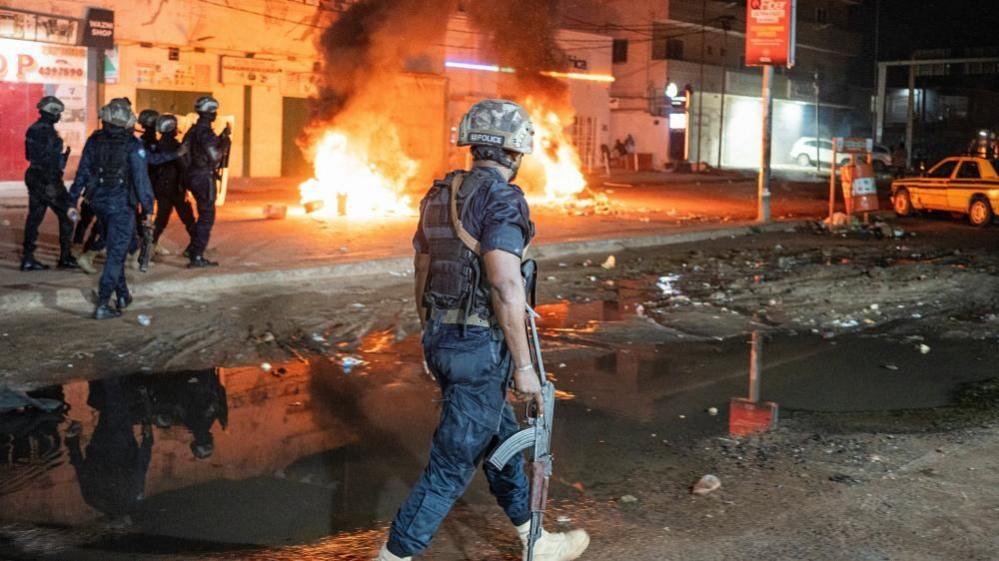
The case dates back to November 26, 2023, when armed attackers stormed military and correctional facilities in Freetown.
The attackers targeted an armoury, military barracks, prisons and police stations before security forces regained control. At least 21 people were killed, while more than 2,000 prisoners escaped from the attacked facilities.
The government described the violence as an attempted coup and subsequently arrested dozens of people.
Koroma was charged with treason and misprision of treason in January 2024. He has denied involvement in the uprising.
Two dozen soldiers and Koroma’s former bodyguard were later convicted by a military court and received prison sentences ranging from 50 to 100 years for their alleged roles in the mutiny.
The decision to drop the case against Koroma therefore represents a significant departure from the government’s earlier prosecution of people accused of involvement in the uprising.
A political opening before 2028
Koroma’s return also comes ahead of Sierra Leone’s next presidential election, scheduled for 2028.
The former president remains an influential figure within the APC, the country’s main opposition party. His homecoming could therefore have political consequences, particularly as the party prepares for its next electoral contest.
For President Julius Maada Bio’s government, allowing Koroma to return may help reduce tensions between the ruling Sierra Leone People’s Party and the APC.
But reconciliation will require more than the withdrawal of one high-profile case.
Sierra Leone needs institutions capable of resolving political disputes through credible courts, electoral processes and dialogue rather than prolonged confrontation.
What comes next
The government’s decision can provide an opportunity to deepen political reconciliation, but transparency will remain important.
Authorities should continue strengthening judicial independence and ensure that decisions involving politically sensitive prosecutions are clearly grounded in law. Opposition parties, meanwhile, have a responsibility to pursue political competition peacefully and through constitutional channels.
ECOWAS’s involvement also highlights the importance of regional diplomacy in preventing political disputes from escalating into prolonged instability.
Koroma’s return is ultimately more than the homecoming of a former president. It is a test of whether Sierra Leone can turn a politically divisive episode into an opportunity for reconciliation ahead of its next electoral cycle.
After years of legal uncertainty and political tension, the challenge now is to ensure that the return of one former leader contributes to a broader restoration of political trust.