oluwatosin oyeniyi
 MALABO, Equatorial Guinea — Equatorial Guinea is facing growing scrutiny over the treatment of migrants deported from the United States after police allegedly pointed firearms at detainees during an altercation at a hotel in Malabo.
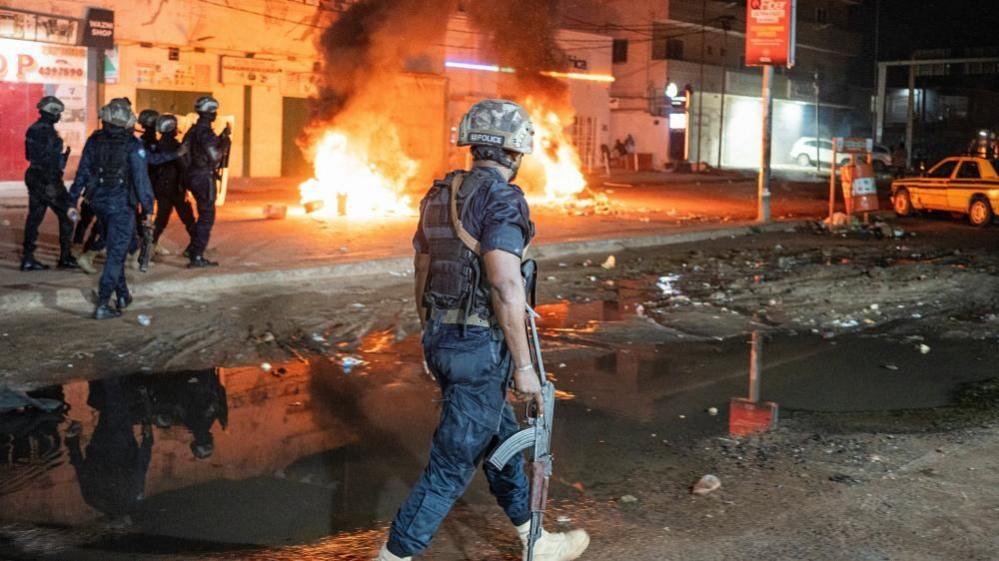
Three witnesses and video footage reviewed by Reuters indicate that men wearing National Police shirts pointed what appeared to be semi-automatic rifles at migrants during the confrontation on Saturday. Reuters said it could not independently verify what triggered the incident.
The incident has intensified concerns about the conditions facing people sent to Equatorial Guinea under a controversial third-country deportation arrangement with Washington.
There are currently 31 US deportees being held at the hotel, according to people familiar with the group. Migrants have reported inadequate medical care, limited access to lawyers and severe psychological distress.
Dispute over confiscated phones
The confrontation reportedly began after migrants sought access to their mobile phones.
One deportee asked police to return a confiscated phone so he could contact relatives and a lawyer. Another migrant began recording the exchange.
According to his account, police then moved against the group and allegedly pointed their weapons at him, ordering him to kneel with his hands raised.
The situation was eventually defused after the hotel director intervened, allowing the migrants to return to their rooms.
The allegations have placed renewed attention on the legal and humanitarian safeguards surrounding the deportation arrangement.
A growing third-country deportation system
The United States has increasingly used agreements with countries other than migrants’ countries of origin to facilitate deportations.
Under these arrangements, people who cannot immediately be returned to their home countries may instead be transferred to a third country.
Equatorial Guinea has received at least 53 people from the United States between November 2025 and July 2026, according to Third Country Deportation Watch, a project tracking the transfers. Another group arrived in August, including six people who had initially refused to leave a US deportation flight in Liberia.
Some of those transferred had previously received protection from US immigration judges because of fears that they could face persecution or torture if returned to their countries of origin.
That has raised a central question: what legal responsibility remains for the United States once a deportee has been transferred to another country?
Washington maintains that the deportations comply with US immigration law. But rights advocates argue that transferring vulnerable migrants to countries where they have little legal protection can create serious accountability gaps.
Concerns over forced repatriation
The controversy extends beyond the alleged confrontation with police.
Human-rights advocates say some migrants have been pressured to return to their countries of origin despite fears of persecution or abuse.
Three deportees told Reuters they had been encouraged to return home and said they had not been presented with meaningful alternatives. Reuters could not independently verify those claims.
The concern is particularly serious for people who had already obtained protection in the United States.
Sending such individuals back to countries where they fear torture or persecution could raise questions under international refugee and human-rights law.
Transparency under pressure
Equatorial Guinea has not publicly detailed the full terms under which it is housing the deportees.
That lack of transparency has become a major concern for lawyers and rights organisations. Independent access to detainees, legal representation, medical care and clear information about their legal status are essential safeguards when people are held outside their country of nationality.
The controversy also comes amid broader criticism of the conditions at the Malabo hotel where the deportees are being held. Earlier reports described the facility as a detention centre rather than a conventional hotel, with migrants restricted from leaving freely.
What should happen next?
The immediate priority should be an independent investigation into the alleged use of firearms and treatment of the detainees.
The Equatorial Guinean authorities should also ensure that every deportee has access to lawyers, medical professionals, consular officials and independent humanitarian organisations.
The United States, meanwhile, should provide greater transparency about its agreements with receiving countries and the safeguards applied to people transferred under them.
Third-country deportation should not create a legal vacuum in which responsibility for vulnerable migrants becomes unclear once they leave US custody.
For Equatorial Guinea, the episode also presents a test of its obligations under international human-rights standards.
The migrants at the centre of the controversy are not simply immigration statistics. They are individuals with legal rights, medical needs and, in some cases, credible fears of persecution.
Ensuring those rights are protected will determine whether third-country deportation agreements can operate with meaningful safeguards — or whether they become a mechanism for moving vulnerable people beyond the reach of effective accountability.