oluwatosin oyeniyi
 As the morning mist lifted over Jomo Kenyatta International Airport this week, the arrival of dozens of heads of state signaled a profound shift in continental power. The Africa Forward Summit, opening in Nairobi, is far more than a routine diplomatic gathering.
Co-hosted by Kenyan President William Ruto and French President Emmanuel Macron, the summit is a high-stakes arena. Here, the future of African industrialization and the reform of the global financial architecture are being aggressively negotiated. With the arrival of Nigerian President Bola Tinubu, the summit has solidified a powerful diplomatic trio determined to move the continent beyond being a primary commodity exporter toward a future defined by green manufacturing.
A New Industrial Strategy
The summit’s core significance lies in its attempt to bridge the gap between climate aspirations and industrial reality. For decades, African nations were forced to choose between development and environmental preservation. Nairobi suggests a new consensus:
- No more asking for permission: Leaders are demanding a seat at the head of the global energy transition table.
- Strategic Partners: Africa is positioning itself as an essential industrial partner, not a victim of climate change.
France’s Strategic Pivot
Geopolitically, the summit marks a fascinating evolution in Africa-France relations. By choosing Nairobi—a bustling Anglophone hub—President Macron is signaling a shift in French foreign policy.
- Beyond Colonial Ties: As French influence faces challenges in the Sahel, Macron is seeking a modern, economically grounded partnership that transcends traditional linguistic boundaries.
- Investment Over Military: This is diplomacy through the lens of green infrastructure and digital transformation, rebuilding French relevance through investment rather than a military footprint.
The “Triangle of Influence”
The summit highlights the emergence of an informal but powerful coalition:
- Kenya (The Hub): President Ruto has cemented Nairobi as the center for African climate negotiations and financial reform.
- Nigeria (The Weight): President Tinubu adds indispensable economic gravity. As the leader of Africa’s largest economy, his participation ensures the summit’s conclusions influence international markets.
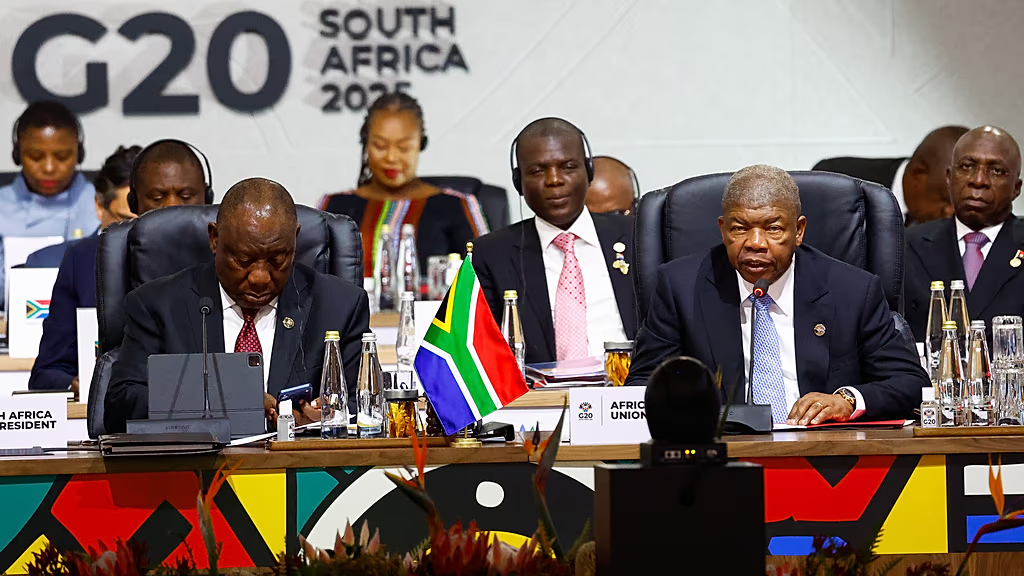
- South Africa (The Partner): Together with Kenya and Nigeria, this “triangle of influence” effectively challenges the status quo of the global financial system.
The Call for Global Finance Reform
At the heart of the summit is an urgent demand to restructure the IMF and World Bank. Leaders argue the current system punishes developing economies with:
- High Borrowing Costs: African nations often face higher risk premiums regardless of their fiscal performance.
- Systemic Inequities: The goal is to provide fairer access to low-interest, long-term financing for climate adaptation and industrial growth.
Green Industrialization: Ending the Extractive Era
The focus has shifted from raw material extraction to local value addition. Africa possesses world-class reserves of lithium, cobalt, and copper. The new goal is to develop domestic manufacturing chains for:
- Electric vehicle (EV) batteries
- Renewable energy components
- Green technology
Challenges and Skepticism
Despite the optimism, tensions remain. Many civil society groups are skeptical of Western motives. Is this true partnership, or simply “green-labeled” access to minerals for Western industries? The challenge for leaders is to ensure “green partnership” does not become a new form of resource-backed debt.
The Africa Forward Summit reflects a continent no longer content to wait for benevolence. By linking climate action with financial reform, Nairobi is crafting a new narrative defined by innovation and strategic agency. The path to a sustainable global future now runs directly through the assembly halls of Nairobi.