oluwatosin oyeniyi
 Pope Leo XIV has begun a high-profile visit in Algeria, marking the start of a multi-country African tour focused on peace, migration, and interfaith relations. Arriving at Algiers international airport on Monday, April 13, 2026, the pontiff commenced an ambitious 11-day itinerary that encompasses four countries, 11 cities, and nearly 18,000 kilometers of travel. Following his departure from Algeria, the delegation will proceed to Cameroon, Angola, and Eaquatorial Guinea. The visit represents the first time a sitting pope has traveled to Algeria. Welcomed with a 21-gun salute by President Abdelmadjid Tebboune, Pope Leo immediately situated his diplomatic and spiritual agenda within the complex framework of North African history, post-colonial statehood, and contemporary global tensions. The demographic center of global Catholicism has definitively shifted southward, rendering Europe a historical anchor rather than the sole engine of the faith. Africa is home to over 288 million Catholics, representing more than 20 percent of the global church population. Vatican data from early 2026 confirms this upward trajectory, framing the pontiff’s longest overseas trip since his May 2025 election as a strategic necessity rather than a mere symbolic gesture. Pope Leo, formerly Friar Robert Prevost and the first United States born pontiff, brings a specific biographical and intellectual connection to the region. As a former head of the Augustinian order, his presence in the birthplace of Saint Augustine of Hippo serves as a direct bridge between the ancient intellectual heritage of the church and its modern demographic reality.
The first 48 hours of the papal visit established a precise diplomatic posture. On Monday, Pope Leo visited the Maqam Echahid monument, which commemorates the hundreds of thousands of Algerians who died during the 1954 to 1962 war for independence against French colonial rule. Laying a wreath at the memorial, he delivered a heavily scrutinized address. He stated that God desires a peace for every nation that is an expression of justice and dignity, not merely an absence of conflict. During a subsequent meeting with government authorities at the El Mouradia Palace, he praised Algerian solidarity as a necessary counterweight to current global imbalances. Speaking on continuous violations of international law, he explicitly criticized neocolonial tendencies. He then visited the Great Mosque of Algiers, standing alongside Rector Mohamed Mamoun Al Qasimi to reinforce a message of Catholic and Islamic convergence. Today, Tuesday, April 14, the delegation moves to the eastern coastal city of Annaba to visit the archaeological ruins of Hippo and celebrate Mass at the Basilica of Saint Augustine.
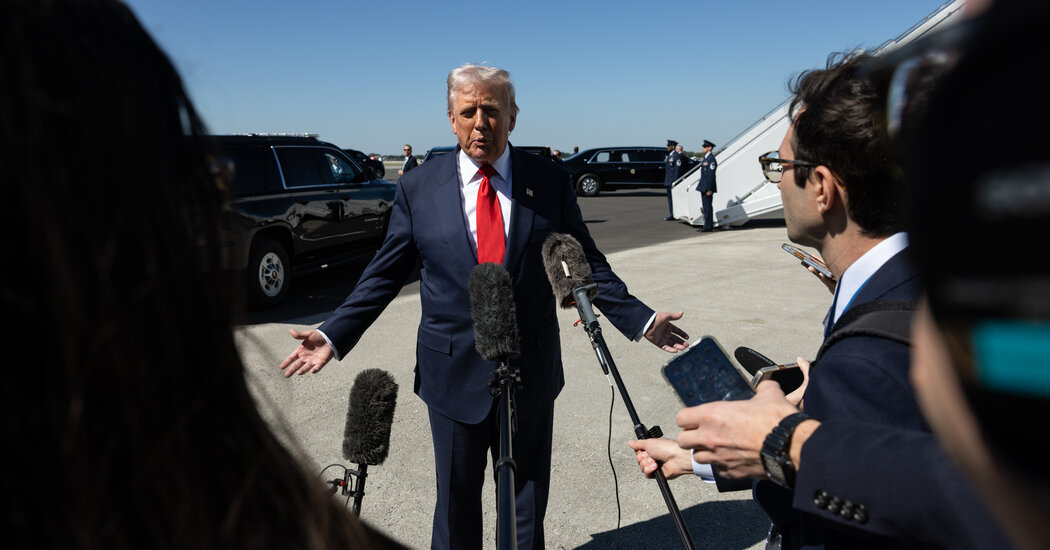
This visit operates on two distinct geopolitical frequencies. The immediate layer concerns interfaith dialogue in a Muslim-majority nation of 47 million people, where the Catholic population numbers approximately 9,000 mostly foreign residents. By prioritizing Algeria, the Vatican is engaging directly with the Islamic world on terms of parity and shared historical legacy, moving past archaic models of religious competition. The secondary, more consequential layer involves the Vatican asserting itself as an independent diplomatic entity unaligned with Western political consensus. Pope Leo has recently engaged in public friction with US President Donald Trump over the ongoing United States and Israeli military actions involving Iran. By delivering a message against neocolonialism from the capital of a non-aligned African nation, the Vatican is telegraphing a deliberate distance from Washington and European foreign policy frameworks. The choice to bypass the United States in favor of Africa for his longest trip sends a definitive message regarding where the Vatican sees the future of global discourse. Africa is becoming more central to global religious and geopolitical conversations, with growing influence in shaping narratives around migration, conflict, and social justice. However, this growing centrality exposes deep structural weaknesses within the international system. Global governance institutions have largely failed to integrate African states as equal partners in conflict resolution or economic planning. The continent remains disproportionately affected by external debt, climate change, and proxy conflicts driven by foreign powers. Pope Leo’s messaging in Algiers indirectly addresses this structural deficit. When foreign capitals treat African nations primarily as resource bases or migration buffers, they perpetuate a cycle of civic instability and economic dependency. Furthermore, political continuity and control within many African states rely heavily on managing these external pressures. Leaders utilize high-profile international visits to project domestic stability, manage internal political continuity, and validate their diplomatic relevance on the world stage. The Vatican is providing a platform for governments to assert agency, but the underlying vulnerability to global economic shifts remains entirely unresolved.
Addressing these structural imbalances requires moving beyond diplomatic set pieces toward rigorous institutional reform. First, international financial institutions must fundamentally restructure sovereign debt mechanisms. This would allow African governments to invest in local infrastructure, education, and social cohesion rather than perpetually servicing foreign loans. This economic foundational shift is a prerequisite for the equitable peace the pontiff advocates. Second, interfaith and intercultural dialogue must be institutionalized at the community level, expanding beyond formal meetings among senior clerics and heads of state. Grassroots civic organizations require direct funding and legal protection to build societal resilience against political extremism and resource disputes. Third, global powers must abandon the transactional approach to African diplomacy. Long-term stability dictates incorporating African leadership into the primary decision making bodies of the United Nations security apparatus and global trade organizations. Solutions must focus on absolute economic sovereignty and equitable resource management to dismantle the neocolonial tendencies identified during the Algiers address.
As the papal delegation prepares to depart North Africa for the high conflict zones of Cameroon, the shifting architecture of global influence becomes evident; the future of international diplomacy will increasingly be defined by how the world engages with the demographic density and political realities of the African continent.