oluwatosin oyeniyi
 NIAMEY, Niger — Niger’s military government has regained control of the capital after a mutiny by soldiers exposed growing tensions within the armed forces and raised new questions about the durability of the junta that has ruled the country since the 2023 coup.
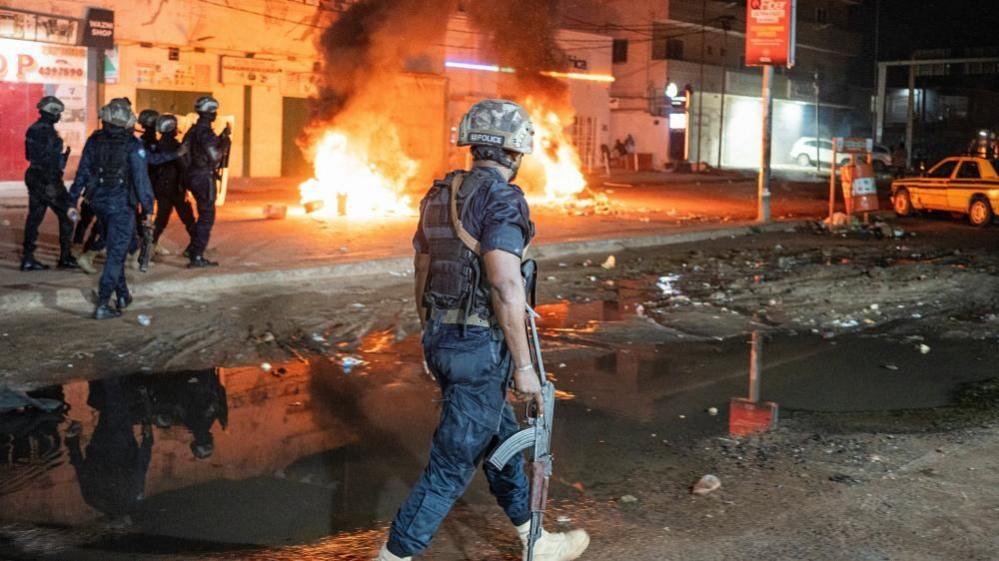
The attempted uprising began on Friday, August 28, around Base 101, a major military installation at Diori Hamani International Airport in Niamey. Fighting later spread towards sensitive locations, including areas near the presidential palace and state broadcaster.
The government said loyalist forces had contained the mutiny by Sunday. Dozens of soldiers were reportedly killed or arrested.
The unrest is significant because it came from within the military itself — the institution that brought General Abdourahamane Tchiani to power in July 2023.
Why did the soldiers revolt?
The full motives behind the mutiny remain unclear, but reports point to growing frustration among some soldiers over the worsening security situation and conditions within the military.
Niger has been fighting armed groups linked to al-Qaeda and Islamic State for years. Despite the junta’s promise to improve security after taking power, militant attacks have continued, particularly in regions close to Niger’s borders with Mali and Burkina Faso.
Some of the soldiers involved in the mutiny reportedly came from areas heavily affected by jihadist violence. This has fuelled speculation that battlefield losses, poor conditions and frustration with military leadership may have contributed to the revolt.
The development presents a difficult problem for Tchiani.
A military government depends heavily on the loyalty of its armed forces. If dissatisfaction begins spreading through the ranks, the junta faces a threat that cannot easily be addressed through political repression alone.
Russia’s role becomes more important
The mutiny also highlighted Niger’s growing dependence on Russia for security support.
Russia’s Africa Corps, which replaced the Wagner Group as Moscow’s main military presence in parts of Africa, assisted Nigerien forces in retaking the airbase. Reports indicate that Russian personnel provided both ground and aerial support during the operation.
That intervention carries wider geopolitical implications.
Since the 2023 coup, Niger has moved away from its former Western security partners, including France and the United States, while strengthening relations with Moscow.
The failed mutiny could deepen that dependence.
If Niger’s military leadership believes Russian forces were essential to preventing an internal revolt, the junta may become even more reluctant to reduce Russia’s security role.
But there is a potential downside.
Greater reliance on foreign forces to protect a government from internal military opposition can raise questions about sovereignty and the long-term strength of national security institutions.
A warning for the Sahel’s juntas
Niger is not the only Sahelian country where military governments have struggled to translate political control into improved security.
Mali and Burkina Faso are also ruled by military juntas that came to power after coups, with all three countries forming the Alliance of Sahel States.
The governments have presented military rule as an alternative to civilian administrations that failed to contain jihadist violence.
The mutiny in Niger, however, highlights the danger facing that argument.
If military governments cannot provide greater security for their own soldiers and civilians, the justification for military rule becomes increasingly difficult to sustain.
The crisis also demonstrates that removing Western troops does not automatically resolve the security problem. Niger has changed its international partners, but the jihadist threat remains.
What happens next?
The immediate priority for the junta will be restoring discipline within the armed forces without creating deeper divisions.
A sweeping purge could remove suspected dissidents but also deepen resentment among soldiers.
The government should instead establish a credible process for determining what triggered the mutiny, while addressing legitimate concerns over military welfare, equipment, deployment and leadership.
At the same time, Niger needs to examine whether its security strategy is delivering results.
Military strength alone cannot defeat the insurgency. Better intelligence, stronger local governance, community cooperation and protection for civilians are also necessary.
The government should also provide clear information about the mutiny. A lack of transparency could encourage rumours and make future unrest more difficult to contain.
A failed mutiny, but not a resolved crisis
Niger’s government has survived its most serious internal military challenge since the 2023 coup.
But survival should not be confused with stability.
The attempted uprising has exposed dissatisfaction within the armed forces, highlighted the continuing jihadist threat and demonstrated how important Russia’s Africa Corps has become to the junta’s security architecture.
For Tchiani, the challenge now is bigger than defeating the soldiers who rebelled.
He must convince the wider military that the government can provide the security, resources and leadership that it promised when it seized power.
For Niger, the deeper question is whether military rule can deliver the stability that justified its arrival.
The failed mutiny may have ended in Niamey, but the pressures that produced it — insecurity, military frustration and political uncertainty — remain.
Until those pressures are addressed, the country’s latest military crisis may be contained rather than resolved.