oluwatosin oyeniyi
 BISSAU, Guinea-Bissau — Guinea-Bissau is preparing to vote on a new constitution on August 30, in a referendum that could fundamentally change how political power is distributed in the West African country.
The proposed constitution would give the president significantly greater control over the government, while reducing the size of parliament and changing the country’s electoral system.
The vote comes just nine months after soldiers seized power in November 2025, interrupting a presidential and parliamentary election one day before electoral authorities were due to announce the results.
The referendum is therefore about more than constitutional reform. It is also a test of Guinea-Bissau’s return to civilian rule and the strength of its democratic institutions.
If approved, the new constitution would take effect ahead of general elections scheduled for December 6, 2026.
What is changing?
The most significant proposed change is the shift in power towards the presidency.
Under Guinea-Bissau’s existing constitutional arrangement, the legislature plays a central role in determining the prime minister, who then forms the cabinet.
The proposed constitution would change that balance. The president would be able to appoint and dismiss the prime minister and members of the cabinet.
The president would also have the authority to create or abolish government ministries and chair the Council of Ministers. In certain circumstances, the president could dissolve parliament during a grave political crisis and dismiss the government.
Supporters of the reform argue that a stronger presidency could reduce the institutional disputes that have repeatedly paralysed Guinea-Bissau’s government.
But critics see a different danger: giving too much authority to one office in a country with a long history of political instability and military intervention.
Manuel Nobre de Barros, a professor at Lusófona University in Guinea-Bissau, told Reuters that the proposed changes would fundamentally alter the balance between the executive and legislature. He argued that the reforms could leave the president with almost unchecked political power.
That concern goes to the heart of the referendum.
A strong executive can make government more efficient. But without effective checks and balances, it can also weaken parliament, political opposition and other institutions designed to prevent the concentration of power.
Parliament would become smaller
The constitutional proposal would also significantly change the legislature.
Guinea-Bissau’s parliament currently has 102 seats. The proposed constitution would reduce that number to 65.
The number of electoral constituencies would also fall from 29 to 12.
Supporters could argue that a smaller parliament would reduce administrative costs and make legislative decision-making more efficient.
The change, however, could also affect political representation.
Nobre de Barros warned that reducing the number of constituencies could weaken parties with strong local support.
In a country where political influence is often rooted in specific communities and regions, fewer constituencies could make it harder for smaller parties and locally based political movements to secure parliamentary seats.
The reform therefore raises an important question: will a smaller parliament make government more effective, or will it reduce the diversity of voices represented in the National Assembly?
A new rule for presidential candidates
The proposed constitution would also introduce a new eligibility requirement for presidential candidates.
Candidates would have to demonstrate that they had lived permanently in Guinea-Bissau for the previous five years.
That condition does not exist in the same form under the current constitution, which requires presidential candidates to be Guinean citizens by birth, at least 35 years old and in full possession of their civil and political rights.
The residency requirement could have important political consequences.
It could encourage stronger domestic political participation and prevent candidates who have spent long periods outside the country from suddenly returning to contest the presidency.
At the same time, critics could argue that such a requirement may restrict political participation, particularly for members of the Guinean diaspora who maintain strong social and economic ties to the country.
The final impact will depend on how the rule is interpreted and enforced.
The referendum follows a disputed election and coup
The timing of the referendum is particularly important.
Guinea-Bissau held presidential and parliamentary elections on November 23, 2025.
The presidential contest was closely fought. Incumbent President Umaro Sissoco Embaló and opposition candidate Fernando Dias da Costa both claimed victory.
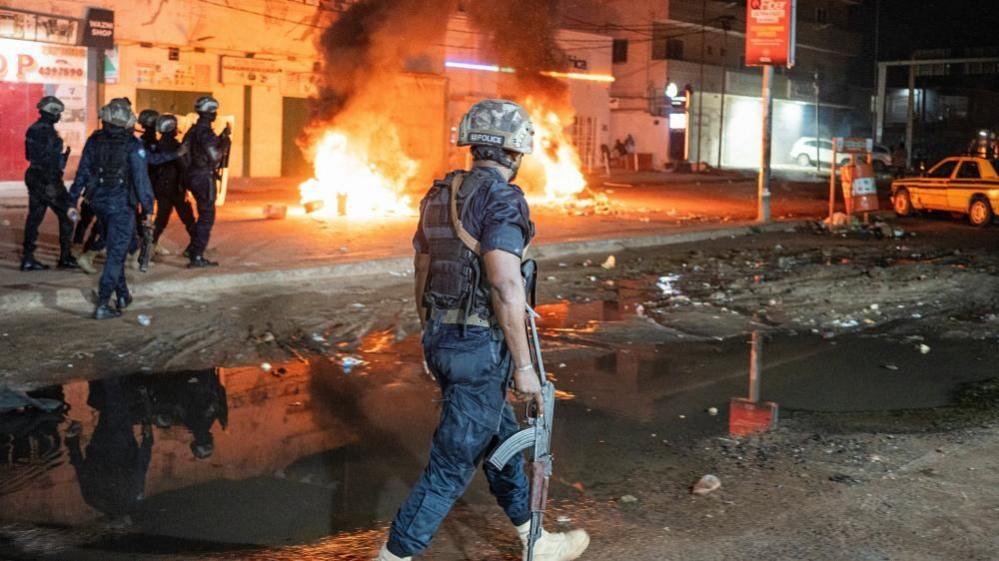
Three days later, on November 26, military officers seized control of the country and suspended the electoral process. The takeover came just one day before the electoral commission was due to announce provisional results.
The electoral commission later said it could not complete the process because armed men had taken electoral materials and computers and destroyed servers containing election data.
As a result, the country never received an official result from the November presidential election.
The African Union condemned the coup and called for a return to constitutional order, consistent with its long-standing rejection of unconstitutional changes of government.
A transitional military administration was subsequently established, with Major-General Horta Nta Na Man becoming interim president.
The transitional authorities later established a Transitional National Council and began preparing a new political framework. The council approved a new constitution in January 2026, while a decree set December 6 as the date for the next general election.
Why the referendum matters
Guinea-Bissau has experienced repeated political crises since independence.
The country’s institutions have often been caught between elected governments, powerful political parties and the military.
The November 2025 coup deepened those concerns.
Freedom House said Guinea-Bissau’s political rights score declined following the coup because the military takeover interrupted the elections and prevented the establishment of an elected government. The organisation also noted that the previous parliament remained dissolved during the transition.
That history makes the constitutional referendum unusually important.
The country is trying to return to elected government, but the proposed system could give the future president more authority than before.
This creates a difficult balancing act.
Guinea-Bissau needs an executive strong enough to govern. But it also needs institutions strong enough to restrain executive power.
The risk of replacing one form of instability with another
The greatest concern is not necessarily that a powerful presidency will automatically lead to authoritarian rule.
The deeper problem is the weakness of institutions.
When courts, parliament, electoral bodies, political parties and civil society lack the capacity to independently scrutinise those in power, constitutional powers can become more difficult to control.
This is particularly relevant in Guinea-Bissau because the country has struggled to establish stable political institutions.
A constitution should therefore do more than define who has power. It should clearly define how that power is limited.
If the president can appoint and dismiss the prime minister, control the cabinet, restructure ministries and dissolve parliament during a political crisis, there must be credible safeguards to prevent those powers from being used to eliminate political opposition.
The wording of the new constitution and the independence of the institutions responsible for interpreting it will therefore matter as much as the referendum result.
What Guinea-Bissau should do next
The referendum provides an opportunity to address some of the country’s long-standing institutional problems. But constitutional reform should be accompanied by broader democratic safeguards.
First, parliament needs meaningful independence.
Reducing the number of lawmakers should not reduce parliament’s ability to scrutinise the executive. Parliamentary committees should have sufficient powers to investigate government decisions, review public spending and hold ministers accountable.
Second, the judiciary must remain independent.
A stronger presidency makes judicial independence even more important. Courts must be able to review executive actions without political interference.
Third, electoral institutions need protection.
The destruction of electoral materials during the 2025 coup showed how vulnerable the electoral process can become during a political crisis. Guinea-Bissau should strengthen the security, digital backup and independent auditing of election data.
Election results should be stored in multiple secure locations so that destroying one server or set of documents cannot erase the democratic record.
Fourth, the military must remain outside electoral politics.
The return to civilian government will not be complete if the armed forces continue to act as an alternative political authority.
Regional organisations such as the African Union and ECOWAS should continue supporting a peaceful transition while encouraging civilian oversight of the security sector.
Finally, the constitutional process must remain inclusive.
Political parties, civil society organisations, traditional leaders, women, young people, the diaspora and regional communities should have opportunities to participate in debates about the country’s political future.
A constitution gains legitimacy not simply because it wins a referendum, but because citizens believe that the rules apply equally to everyone.
December election will be the real test
The August 30 referendum is only the beginning.
The bigger test will come in December, when Guinea-Bissau is expected to hold general elections under the new political framework.
For those elections to restore confidence, voters need to know that candidates can campaign freely, political parties can compete fairly, journalists can report without intimidation and election results will be protected from interference.
The international community will also be watching.
Guinea-Bissau’s partners have a role to play, but the responsibility for rebuilding democratic institutions ultimately belongs to the country itself.
The constitutional referendum could help create a more stable political system if it is accompanied by strong checks and balances.
It could also deepen the country’s problems if it concentrates too much authority in the presidency without adequate institutional safeguards.
For Guinea-Bissau, the central question is therefore not simply whether the country needs a new constitution.
It is what kind of political system the constitution will create.
After a coup interrupted an election, the country now has a chance to rebuild its democratic institutions. The priority should be to ensure that the return to civilian government does not merely transfer power from military hands to an overly powerful presidency.
A durable democracy requires more than elections.
It requires institutions capable of limiting power, protecting citizens and ensuring that political disagreements are settled through law rather than force.
That is the standard by which Guinea-Bissau’s new constitution should ultimately be judged.