oluwatosin oyeniyi
 KINSHASA, Democratic Republic of Congo — The political contest over the Democratic Republic of Congo’s next presidential transition has begun more than two years before the scheduled end of President Félix Tshisekedi’s mandate, with a growing constitutional dispute threatening to deepen divisions between the government, opposition and civil society.
At the centre of the dispute is the government-backed push to establish a legal framework for a constitutional referendum. Although the administration presents constitutional reform as a broader effort to strengthen state institutions, opposition groups fear the process could eventually weaken presidential term limits and create a pathway for Tshisekedi to seek a third term in office.
Under the current Constitution, the president is limited to two five-year terms. Tshisekedi’s second mandate is expected to end after the 2028 electoral cycle. The Constitution also protects the two-term limit from revision, making any attempt to alter the presidential succession framework particularly sensitive.
The referendum law at the heart of the dispute
The latest confrontation began in Parliament, where lawmakers in June approved legislation establishing conditions for organising a referendum. The Constitutional Court subsequently ruled in July that the legislation was compatible with the Constitution, although it raised concerns about several provisions. The court’s decision nevertheless gave the government a potential legal route towards a constitutional reform process.
The legislation provides for the creation of a constituent assembly followed by a referendum in circumstances described as a “major dysfunction” of state institutions. Critics argue that the broad language could create room for political manoeuvring. Their concern is not simply whether a referendum can be held, but whether constitutional restructuring could eventually be used to modify rules governing presidential tenure.
The government rejects the suggestion that the process is designed to extend Tshisekedi’s presidency. Officials have presented the proposed reforms as an institutional exercise aimed at addressing weaknesses in the country’s 2006 Constitution.
Tshisekedi himself has repeatedly denied that he is seeking to remain in power indefinitely. However, his comments in May that he would accept another mandate if the Congolese people asked him to return have intensified speculation surrounding his intentions.
Tshisekedi asks Parliament to reconsider referendum legislation
The constitutional controversy entered a new phase in August when Tshisekedi asked Parliament to reconsider the referendum law following the Constitutional Court’s observations. According to the National Assembly, the president’s request, submitted on August 10, followed the court’s July ruling and requires certain provisions to be removed, replaced or rewritten. Parliament has indicated that the new deliberation will be placed on the agenda for its September 2026 session.
The move has been interpreted by some observers as an attempt to reduce tensions with opponents of the reform.
But it has not ended the dispute. The opposition coalition known as C64, or the Article 64 Coalition, argues that sending the legislation back to Parliament does not amount to abandoning constitutional reform. The coalition takes its name from Article 64 of the Constitution, which calls on citizens to resist anyone who takes power in violation of the constitutional order.
Opposition fears a third-term strategy
For opposition parties, the constitutional debate is fundamentally about the future of democratic succession. The C64 has brought together several major opposition figures, including Martin Fayulu, Moïse Katumbi, Jean-Marc Kabund and other political leaders. The coalition has accused the government of using constitutional reform as a possible mechanism for extending Tshisekedi’s tenure. Those fears have already spilled onto the streets.
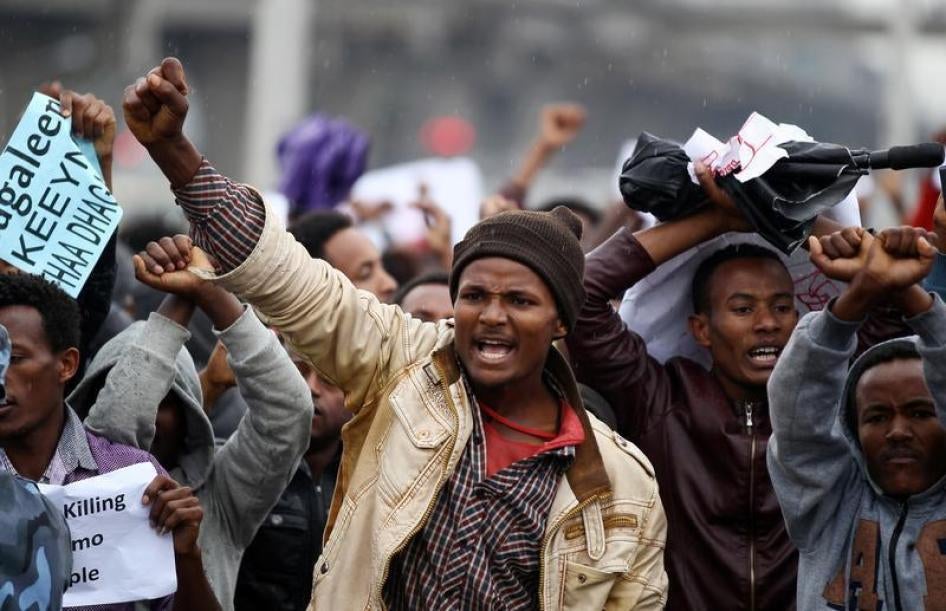
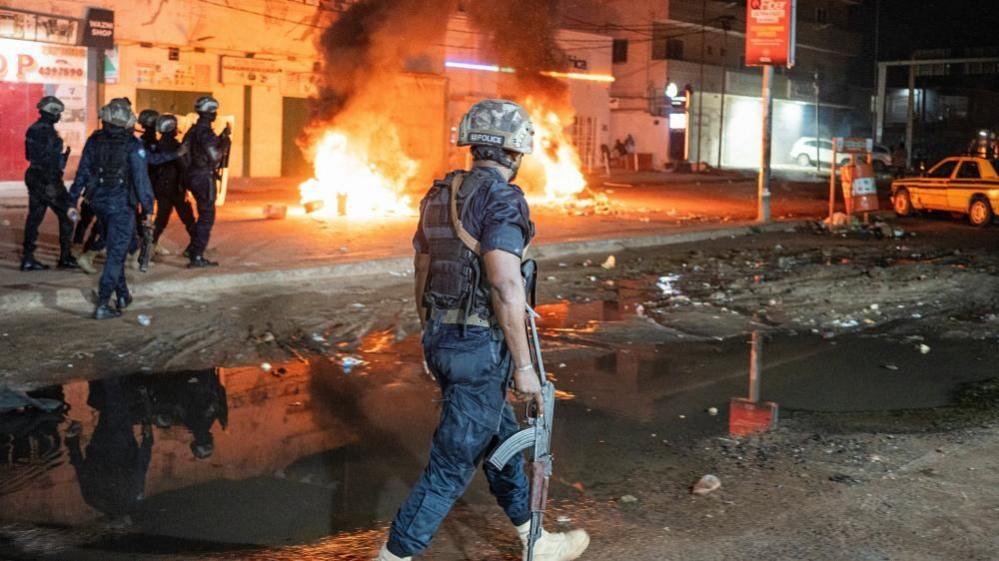
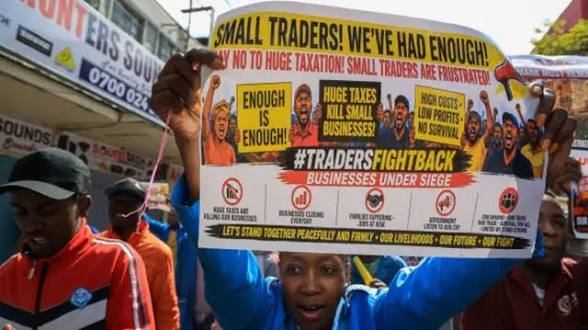
Thousands of people demonstrated in Goma and Bukavu in eastern Congo in July against constitutional amendments that protesters feared could allow Tshisekedi to pursue a third term. The opposition has also demanded an inclusive national dialogue covering the constitutional dispute, political prisoners, civic freedoms and the country’s electoral future.
Religious leaders, particularly the Catholic and Protestant churches, have attempted to mediate between the government and opposition. In July, their intervention helped persuade C64 to suspend planned demonstrations temporarily and give the government until August 15 to make progress towards dialogue. That deadline has since passed without a comprehensive agreement. C64 subsequently announced plans for renewed mobilisation, including a national demonstration scheduled for September 15. Tshisekedi, meanwhile, has said he intends to address the nation on the proposed national dialogue, although the precise format and timetable remain unclear.
Why the 2028 succession matters now
At first glance, the 2028 election may appear distant. But in countries where constitutional amendments have previously been used to reshape presidential tenure, early political manoeuvring can be decisive.
The debate in Congo therefore carries implications beyond Tshisekedi personally. A credible constitutional order requires political actors to know that the rules governing the transfer of power cannot be changed simply because an incumbent approaches the end of a permitted mandate. This is particularly important in a country where institutions remain under considerable pressure from political competition, armed conflict and economic hardship.
The eastern DRC security crisis has already placed enormous strain on the state. Fighting involving the M23/AFC rebel alliance continues, while diplomatic efforts involving Kinshasa, Kigali and international mediators remain fragile. At the same time, the country is dealing with a serious Ebola outbreak.
The combination of war, public-health emergencies and political uncertainty creates a dangerous environment in which constitutional disputes can quickly become broader questions about state legitimacy.
The lessons from Africa’s constitutional crises
The DRC is not alone in facing questions over presidential term limits. Across Africa, attempts by political leaders to alter or circumvent constitutional restrictions have repeatedly triggered protests, political crises and, in some cases, military intervention.
The lesson is not that constitutional reform is inherently undemocratic. Constitutions must evolve when societies change. The danger arises when reforms are designed, timed or implemented primarily to protect the political survival of an incumbent.
For the DRC, the credibility of any constitutional process will therefore depend heavily on how it is conducted.
A legitimate reform process should include broad political participation, independent constitutional review, transparent public consultations and clear guarantees that fundamental democratic safeguards cannot be weakened through temporary political majorities.
Building safeguards before 2028
The most important question is not simply whether Tshisekedi will seek another term. It is whether Congo’s institutions are strong enough to manage the succession regardless of what the incumbent wants. Several safeguards could help.
- First, protect the constitutional term limit. Any reform process should explicitly preserve the provisions protecting presidential succession unless there is overwhelming constitutional and democratic justification for change.
- Second, strengthen judicial independence. The Constitutional Court must be able to review referendum and constitutional legislation without political pressure.
- Third, guarantee an inclusive political dialogue. Government, opposition parties, civil society, religious institutions and other relevant stakeholders should have meaningful participation rather than being invited merely to endorse decisions already taken.
- Fourth, protect civic space. Peaceful demonstrations, political organising and public debate should remain protected, provided they comply with the law.
- Fifth, strengthen electoral institutions. The credibility of the 2028 election will depend on an electoral commission, courts and security institutions that are trusted across political divisions.
- Finally, make constitutional changes transparent. Citizens should be able to understand exactly what provisions are being changed, why they are being changed and what those changes mean for the country’s future leadership.
A test for Congo’s democratic future
The constitutional battle is still unfolding, and it would be premature to conclude that Tshisekedi will seek a third term.
What is already clear, however, is that the political struggle surrounding his departure has begun much earlier than the election itself. The government’s constitutional initiative has created a credibility test: can Congo reform its institutions without weakening the rules governing the peaceful transfer of power?
For the opposition, the answer will require firm protection of term limits and a credible national dialogue. For the government, the challenge is to demonstrate that constitutional reform is motivated by institutional needs rather than presidential succession.
Ultimately, the real test of Congolese democracy will not be whether one politician leaves office in 2028. It will be whether the country’s institutions are strong enough to ensure that leaving office remains the normal and enforceable outcome of constitutional government.
If Congo can establish that principle, the 2028 transition could become an important demonstration of democratic resilience in Central Africa. If it fails, the constitutional dispute could deepen political instability in a country already confronting war, displacement and a major public-health crisis.