oluwatosin oyeniyi
 Knysna, South Africa — South African police have arrested two men in connection with the killing of former Knysna mayor and serving African National Congress (ANC) councillor Aubrey Tsengwa, as investigators work to establish who ordered the attack and why.
The arrests came days after Tsengwa was shot dead in Knysna, Western Cape, in a killing that has intensified fears over political violence ahead of South Africa’s local government elections.
The latest police update is important because earlier reports suggested that more suspects could be arrested. The National Prosecuting Authority (NPA) says investigators are still searching for additional suspects, including a former ANC councillor and a taxi boss. The arrests also come as South Africa faces renewed concern over gun violence after the separate killing of former world boxing champion Zolani “Last Born” Tete in the Eastern Cape.
Two suspects arrested
Western Cape police said two men, aged 39 and 46, were arrested on Saturday by a multidisciplinary team involving serious violent crime detectives, crime intelligence officers, local police, a combat team and a drone unit.The suspects are facing charges of conspiracy to commit murder. They were expected to appear before the Knysna Magistrates’ Court on Monday, August 24.
Police also seized two vehicles, three firearms and several mobile phones during the investigation. The suspects also face three attempted murder charges because three people were travelling with Tsengwa when the shooting occurred. Police have not yet publicly identified the alleged mastermind or confirmed the motive. The NPA says investigators are looking for two additional people. One is reportedly a former ANC councillor, while the other is a taxi industry figure.
How Aubrey Tsengwa was killed
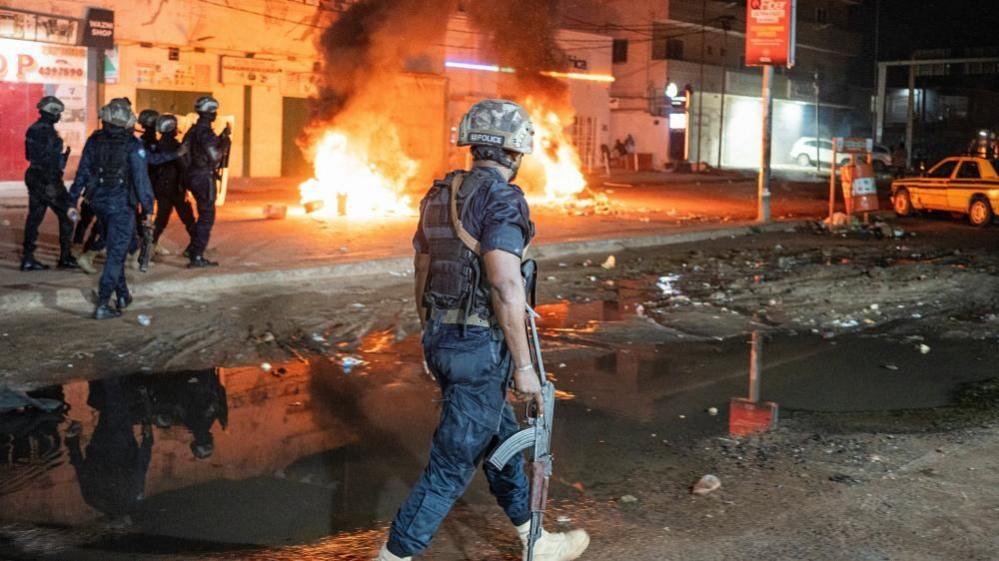
Tsengwa, 48, was shot on the evening of August 19 while travelling home in Joodsekamp, Knysna. According to police, an unidentified gunman approached the vehicle and opened fire before fleeing on foot. Tsengwa suffered multiple gunshot wounds and was pronounced dead at the scene. One of the passengers was wounded in the arm.
Police registered a murder case and three attempted murder cases following the attack. Tsengwa was not only a former mayor. He was also the sitting ANC councillor for Ward 8.
He served as Knysna’s executive mayor from August 2022 until February 2025. His death has therefore created concern about the safety of elected officials and the wider political environment in the municipality.
Three ANC members killed in days
The killing became even more alarming after two other ANC members were shot dead in Knysna the following night. Former Ward 7 councillor Mandla Matiwane, 47, and taxi industry figure Mandla Tyololo, 48, were killed in Bongani on August 20. Their deaths came less than 24 hours after Tsengwa was killed.
The three killings have raised fears that the attacks could be connected. Local reporting has pointed to a history of political tensions within the Knysna ANC, although investigators have not publicly established a definitive link between the killings. That distinction matters.
Authorities must establish the facts through evidence rather than allowing speculation to determine the narrative. If the killings are politically motivated, the attacks could have serious consequences for local democracy. Politicians and councillors who fear assassination may become less willing to challenge powerful interests or participate openly in political competition.
Election season raises the stakes
The Western Cape government has already warned about the political implications. Western Cape Minister of Police Oversight and Community Safety Anroux Marais said Tsengwa’s murder came during a sensitive political period as South Africa approaches local government elections.
She called for vigilance against political violence and welcomed the deployment of the South African Police Service’s Provincial Serious and Violent Crime Unit to investigate the killing. The concern is not without precedent. South Africa has struggled for years with politically linked killings, particularly at local government level. Political competition can become dangerous when control over public resources, municipal contracts, business interests and local influence is mixed with criminal networks.
The danger is that violence can gradually become a tool for settling political and economic disputes. That threatens more than individual lives. It weakens public institutions.
Zolani Tete’s killing adds to the national alarm
The concern over Tsengwa’s killing comes at the same time as South Africa mourns the death of former world boxing champion Zolani Tete. Tete, 38, was shot dead outside his home in Mdantsane, Eastern Cape, on Friday, August 21.
According to Reuters, two armed men wearing balaclavas got out of a vehicle and opened fire as Tete arrived at his residence. A 27-year-old woman travelling with him was also shot multiple times and taken to hospital. Police have launched an investigation, but the motive remains unknown.
Tete was one of South Africa’s most accomplished boxers. He won the IBF junior-bantamweight world title in 2014 and later captured the WBO bantamweight crown. He became internationally famous in 2017 when he stopped fellow South African boxer Siboniso Gonya in just 11 seconds. It remains the fastest stoppage in a world title fight. His death has shocked South Africa’s boxing community and added to the national conversation about violent crime.
Importantly, the two cases are not known to be connected. The significance lies in the wider picture: within days, a former mayor and a world boxing champion were both killed in separate shootings, while Knysna was dealing with three killings involving ANC members.
South Africa’s wider violence problem
South Africa continues to experience one of the world’s highest murder rates, despite recent improvements in homicide figures. The murder of a public figure such as Tete can draw international attention to a problem that affects millions of ordinary South Africans every day.
Violent crime has consequences far beyond the immediate victims. It affects businesses, families, schools, communities and investment. It can discourage people from using public spaces and create a climate where fear becomes part of everyday life. For political leaders, the consequences can be even more serious. When elected officials become targets, communities may lose confidence in the state’s ability to protect people who serve in public office.
What needs to change?
The arrests in the Tsengwa case are an important step, but arrests alone will not solve South Africa’s political killing problem. Investigators must establish the entire chain behind targeted killings. That means identifying not only the person who pulled the trigger, but also anyone who planned, financed, supplied weapons or provided information for the attack.
- Strengthen investigations into political killings: South Africa needs specialised investigative capacity for politically linked murders. Investigators should follow financial records, communications, firearms, vehicles and relationships between suspects. Cases should not end with the arrest of the gunman if evidence points to people who commissioned the killing.
- Protect witnesses: Witnesses are often critical to murder investigations but may fear retaliation. Effective witness protection can help prosecutors build stronger cases against organised criminal networks and those who order political assassinations.
- Improve firearm control: The repeated use of firearms in violent crime highlights the need for stronger efforts to trace illegal weapons. Every firearm recovered during an investigation should be examined for links to previous crimes. The three firearms seized in the Tsengwa investigation could therefore become important pieces of evidence if forensic testing connects them to the shooting.
- Protect councillors and community leaders: Local government officials operating in high-risk areas need proper security assessments. This does not mean turning municipalities into heavily guarded spaces. It means identifying credible threats early and creating mechanisms for officials to report intimidation. Following the recent killings, several Knysna councillors were moved to places of safety, reflecting the level of concern in the municipality.
- Address the economic roots of local violence: Political killings are rarely only about politics. Where political influence intersects with municipal contracts, construction, transport, land and other lucrative sectors, criminal groups can develop incentives to control political decisions. Transparent procurement, strong municipal oversight and effective investigations into corruption can reduce the value of controlling public office through violence.
A test for South Africa’s justice system
The investigation into Aubrey Tsengwa’s murder now faces a crucial test. The public needs to know who planned the attack, who carried it out and what motivated it. But the case must be handled through evidence and due process.
The same principle applies to the investigation into Zolani Tete’s killing. Police have urged the public not to speculate or circulate unverified claims while investigators pursue leads. South Africa cannot afford for high-profile killings to become another cycle of headlines followed by unresolved questions.
The country needs convictions that expose the networks behind targeted violence, not simply arrests that provide temporary reassurance. For Knysna, the priority is immediate: protect residents and public officials, establish whether the three killings are connected and bring everyone responsible before the courts.
For South Africa, the longer-term challenge is larger. Political competition must never become a matter of survival.The killing of a former mayor, the deaths of two other ANC members and the separate murder of a world boxing champion have once again placed gun violence at the centre of the national conversation.
The response must go beyond condemnation. It must strengthen investigations, protect witnesses, secure communities, disrupt illegal firearms networks and ensure that political and economic disputes are settled through institutions rather than bullets.