oluwatosin oyeniyi
 Libreville, Gabon — Gabon has revived its national Festival of Cultures after an eight-year interruption, bringing the country’s cultural diversity back into the spotlight in Libreville from August 21 to 23.
The 15th edition of the festival was held under the theme “Reappropriation of Our Cultural Values” and brought together representatives from Gabon’s nine provinces, artists, artisans, cultural practitioners and members of the public.The return of the festival comes as Gabon seeks to strengthen cultural identity, involve young people in national development and give greater visibility to its creative and cultural sectors.
The festival was officially opened on August 21 by Vice-President of the Republic Alexandre Barro Chambrier, who represented President Brice Clotaire Oligui Nguema. He urged younger generations to take ownership of the event and described culture as a potential force for national cohesion and engagement with other cultures.
A return to a shared cultural space
The Festival of Cultures is not a new initiative. It was created in 1997 by former Libreville mayor Paul Mba Abessole. Its original purpose was to bring different communities together through cultural expression and promote mutual respect and social cohesion in the capital.
Its return therefore carries significance beyond entertainment.
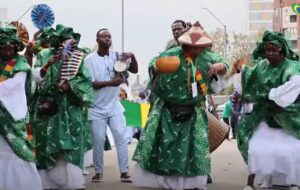
The 2026 edition featured stands representing all nine provinces, alongside exhibitions, traditional performances, artistic presentations, craft sales and other cultural activities. Organisers also created a children’s village with storytelling, games and cultural activities, while an artisans’ street provided space for local craft producers. Senegal was invited as the festival’s guest country, adding a regional dimension to the event. Performances and cultural expressions from both countries featured during the opening celebrations. For Gabonese authorities, the festival is an opportunity to reconnect citizens with traditions that risk becoming less visible as younger generations grow up in an increasingly urban and digital society.
“After eight years of absence, the Festival of Cultures returns,” Culture Minister Paul Ulrich Kessany said at the opening. He described the event as an opportunity to reconnect with part of Gabon’s history and identity while treating traditions as a resource that can evolve.
Why cultural transmission matters
Gabon is home to a complex cultural landscape, with many ethnic communities and national languages. This diversity means that protecting cultural heritage requires more than preserving monuments or staging annual performances. Languages, oral traditions, music, dance, storytelling, ceremonies, crafts and indigenous knowledge are also part of the country’s living heritage.
UNESCO has warned that some indigenous languages in Gabon face gradual decline. Its work with Baka and Koya communities has focused on documenting and promoting languages that are vulnerable because their speakers often live far from major urban and decision-making centres. The challenge is particularly important for younger people. When traditional knowledge is not passed from parents, grandparents and community leaders to children, cultural practices can disappear within a few generations.
Gabon has already taken steps in this direction. In June 2026, the government completed a five-day training programme on documenting and inventorying intangible cultural heritage. Forty-five cultural professionals, researchers and community representatives participated in the programme, which was designed to improve the country’s ability to identify, document and preserve cultural practices.
The country also has an important recent cultural achievement to build on. In 2025, Mvet Oyeng, the musical art and related practices of the Ekang community, was added to UNESCO’s Representative List of the Intangible Cultural Heritage of Humanity. UNESCO describes the Mvet as a cultural practice connected to identity, memory and social cohesion.
Culture can become an economic opportunity
The festival also highlights a wider question: how can Gabon turn cultural preservation into sustainable economic activity?
Artists, musicians, performers, designers, filmmakers, storytellers and artisans can contribute to employment and tourism when cultural industries receive consistent support. The Gabonese government has identified the development of arts and cultural industries as part of its broader policy agenda. Its 2026 ministry roadmap includes the promotion of arts and cultural industries, stronger cultural infrastructure and greater professionalisation of the sector. This creates an opportunity to move beyond festivals as isolated events.
A successful cultural festival can generate income for artisans, performers, food vendors, designers, hospitality businesses and other small enterprises. It can also encourage domestic tourism by giving visitors a reason to explore the country’s different cultural regions. UNESCO similarly argues that heritage can support socio-economic development when conservation is connected to entrepreneurship, digital technology and opportunities for women and young people.
The challenge is sustaining the revival
The biggest test for Gabon will be what happens after the three-day celebration.
An eight-year interruption shows the vulnerability of cultural programmes when they depend heavily on irregular public support. A festival can create excitement for a few days, but cultural preservation requires continuous investment throughout the year.
There is also a risk that cultural traditions become reduced to performances for tourists or official ceremonies. Communities should remain active participants in deciding what is documented, presented and commercialised. The government can strengthen the festival’s long-term impact by establishing a permanent annual calendar, supporting provincial cultural centres and creating grants for community-led heritage projects.
Schools should also become part of the preservation strategy. Cultural education could include local languages, oral history, traditional music, storytelling, crafts and knowledge of the country’s different communities.
Digital platforms offer another opportunity. Young Gabonese creators can record elders telling traditional stories, document disappearing languages, produce podcasts and short films, and create digital archives that make cultural knowledge accessible to a new generation. UNESCO’s work with Baka and Koya communities provides an example. Its language preservation project has used research, community participation and audiovisual content to document and promote vulnerable languages.
A festival that can become more than a celebration
The revival of the Festival of Cultures is significant because it comes at a time when Gabon is placing greater emphasis on youth participation and national identity.
In August, the government and United Nations system in Gabon marked International Youth Day around the theme of a diverse youth population proud of its cultural identity and united around a common future. That message closely reflects the purpose of the revived festival. For Gabon, the challenge now is to turn cultural pride into a lasting national programme. That means protecting vulnerable traditions, supporting the people who keep them alive, creating economic opportunities around cultural production and ensuring that young people are not simply spectators but active custodians and innovators.
The return of the Festival of Cultures has reopened an important national platform. Its lasting success will depend on whether Gabon can keep that platform alive long after the stages in Libreville have been dismantled. For Africa, the lesson is broader: cultural heritage is not simply a record of the past. When communities are given the resources to protect, teach and creatively reinterpret their heritage, culture can become a tool for social cohesion, youth engagement, tourism, entrepreneurship and sustainable development.