oluwatosin oyeniyi
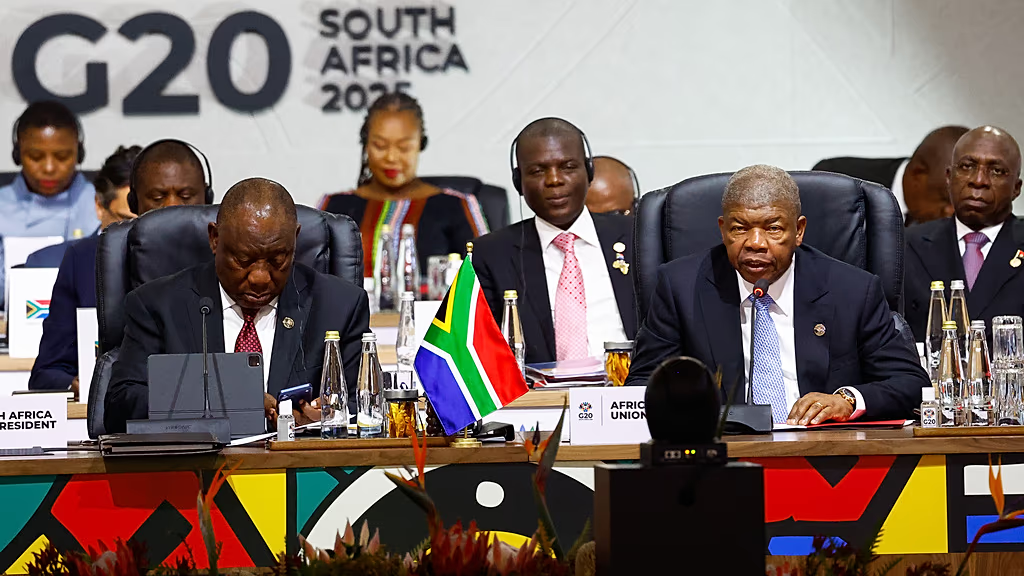
 ADDIS ABABA – The halls of the United Nations Economic Commission for Africa (UNECA) in Addis Ababa are currently witnessing a historic convergence. From July 29 to 30, 2026, the inaugural World Public Summit: Africa has brought together over 700 delegates, including heads of state, diplomats, and civil society leaders from all 54 African nations. Under the theme “New World: Africa in Shaping a Shared Future,” this summit is not merely another high-level talk shop; it represents a strategic effort to place African perspectives and values at the heart of a rapidly evolving global dialogue.
The timing and location of the summit are deeply symbolic. Addis Ababa, the headquarters of the African Union and the UNECA, has long been the heartbeat of continental diplomacy. By hosting the first regional edition of the World Public Summit here, organizers are tapping into Ethiopia’s historical role as a beacon of African independence and its modern status as a diplomatic hub. The summit aims to move beyond transactional politics, focusing instead on what Secretary General of the World Peoples Assembly, Andrei Belyaninov, describes as “conscious unity”—a framework for global cooperation built on mutual respect and shared responsibility.
Central to the summit’s agenda is the integration of indigenous African philosophies into modern governance. The concept of Ubuntu—“I am because we are” has been a recurring theme in the plenary sessions. Delegates are exploring how this communal ethos can provide a more sustainable and just basis for international relations compared to the often-individualistic models of the West. This shift is particularly relevant as the continent grapples with the fallout of global funding cuts in health and the increasing frequency of climate-related disasters, which demand a more collective and resilient response.
The summit’s program is broad, covering critical areas such as “True Sovereignty,” which links infrastructure and food security to information ecosystems, and “Innovations for the Future,” which addresses ethical artificial intelligence and technological leapfrogging. A significant emphasis has also been placed on youth leadership. With Africa home to the world’s youngest population, the summit features dedicated sessions on developing professional potential and involving young leaders in international programs, recognizing that the continent’s future depends on the agency of its youth.
Beyond policy, the summit is a celebration of African heritage. The preservation of the continent’s history and the role of the Global Black History, Heritage and Education Centre are central discussion points. Cultural diplomacy is being utilized as a tool for bridge-building, with exhibitions like “Unity” and “The World Paints Happiness” showcasing the continent’s creative vitality. Even interdisciplinary projects like “The Zambezi River: Economy, Society, Soul” are being used to highlight the shared socioeconomic and spiritual importance of Africa’s natural resources across national borders.
However, the summit does not shy away from the structural challenges facing the continent. Discussions on economic integration and scientific cooperation are taking place against a backdrop of global economic volatility and shifting geopolitical alliances. The “African Communiqué,” expected to be adopted at the summit’s conclusion, will likely call for a more equitable global financial architecture and greater African representation in international decision-making bodies.
For Ethiopia, the summit is an opportunity to reclaim its leadership role in continental affairs. After a period of internal and regional challenges, successfully hosting such a high-profile international gathering reaffirms Addis Ababa’s position as an indispensable pillar of African stability and diplomacy. The proposals formed here are intended to set the agenda for the Second World Public Assembly in Moscow later this year, ensuring that the “Addis Ababa voice” carries weight in the broader global conversation.
Ultimately, the World Public Summit: Africa is a testament to a continent that is increasingly confident in its own identity and strategic importance. By asserting that the future cannot be built alone and must be born in dialogue and trust, Africa is not just asking for a seat at the table; it is redefining the table itself. As the summit concludes, the world will be watching to see if the spirit of Ubuntu can indeed provide the contours for a new world that works for all.