oluwatosin oyeniyi
 The Economic Community of West African States (ECOWAS) has officially endorsed the Nigeria–Morocco Atlantic Gas Pipeline, describing it as one of the continent’s most ambitious regional infrastructure projects and a strategic investment in West Africa’s long-term energy and economic future.
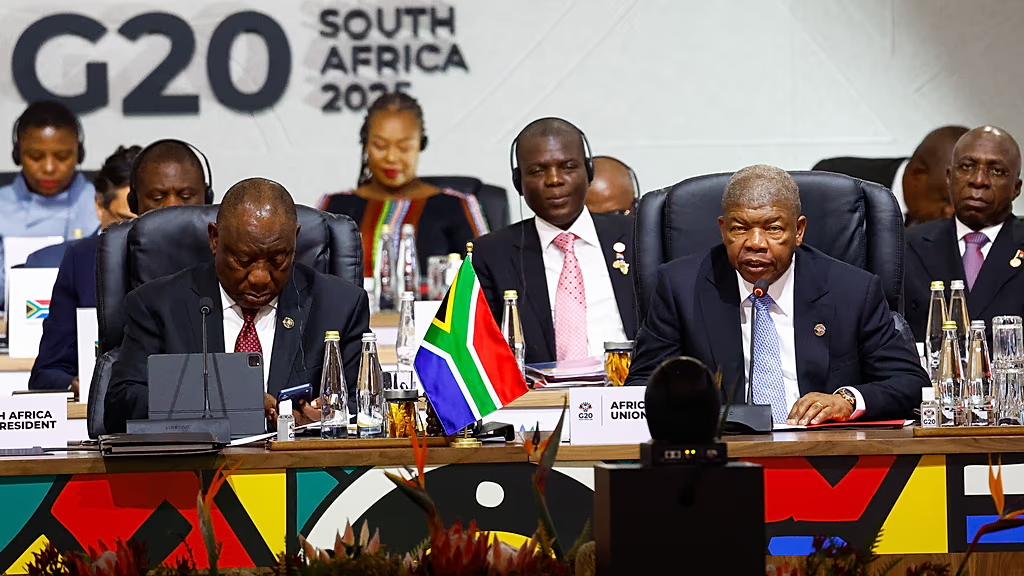
The endorsement came during the 69th Ordinary Session of the ECOWAS Authority of Heads of State and Government, where regional leaders reaffirmed their commitment to strengthening cross-border infrastructure and accelerating economic integration across the sub-region.
A Strategic Regional Energy Corridor
Stretching approximately 5,600 kilometres along the Atlantic coast, the Nigeria–Morocco Atlantic Gas Pipeline is expected to transport natural gas from Nigeria through several West African countries before reaching Morocco, where it will connect to existing European gas networks.
The project is designed to pass through 13 West African coastal states before terminating in Morocco, creating one of the world’s longest offshore and onshore gas pipeline systems.
ECOWAS leaders described the initiative as a transformational project capable of expanding access to cleaner energy, supporting industrial development, improving electricity generation, and deepening regional trade.
Boosting Energy Security
The regional bloc noted that millions of people across West Africa still face unreliable electricity supplies and limited access to modern energy infrastructure.
By increasing the availability of natural gas across participating countries, the pipeline is expected to:
- Improve regional energy security.
- Support electricity generation and transmission.
- Encourage industrial growth and manufacturing.
- Reduce dependence on more expensive imported fuels.
- Promote cleaner energy as countries transition toward lower-carbon economies.
Officials believe the project could significantly strengthen the implementation of the African Continental Free Trade Area (AfCFTA) by providing the energy infrastructure needed to support increased production and cross-border commerce.
Economic Integration and Investment
Beyond energy, the pipeline is expected to stimulate large-scale investment throughout West Africa. Construction activities are projected to generate thousands of jobs while creating opportunities for local contractors, engineering firms, and service providers. Regional policymakers also anticipate that improved energy access will attract greater foreign direct investment into manufacturing, mining, agro-processing, and other productive sectors that depend on stable power supplies.
For Nigeria, Africa’s largest natural gas producer, the project represents an opportunity to monetise vast gas reserves while strengthening its position as a regional energy hub.
Environmental and Financial Considerations
While ECOWAS leaders welcomed the project, experts acknowledge that implementation will require significant financial commitments and continued cooperation among participating countries.
Questions surrounding financing, environmental safeguards, security along the pipeline route, and regulatory coordination remain central to the project’s long-term success.
Officials stressed that sustained collaboration between governments, development finance institutions, and private investors will be essential to moving the project from planning to full implementation.
Looking Ahead
The ECOWAS endorsement provides renewed political momentum for the Nigeria–Morocco Atlantic Gas Pipeline as technical studies, financing arrangements, and intergovernmental negotiations continue.
If completed, the project could reshape West Africa’s energy landscape by improving electricity access, supporting industrialisation, strengthening regional integration, and creating new export opportunities to international markets.
For ECOWAS, the pipeline represents more than an energy project—it is a flagship initiative aimed at advancing economic cooperation and sustainable development across West Africa while reinforcing the region’s role in the global energy transition.