oluwatosin oyeniyi
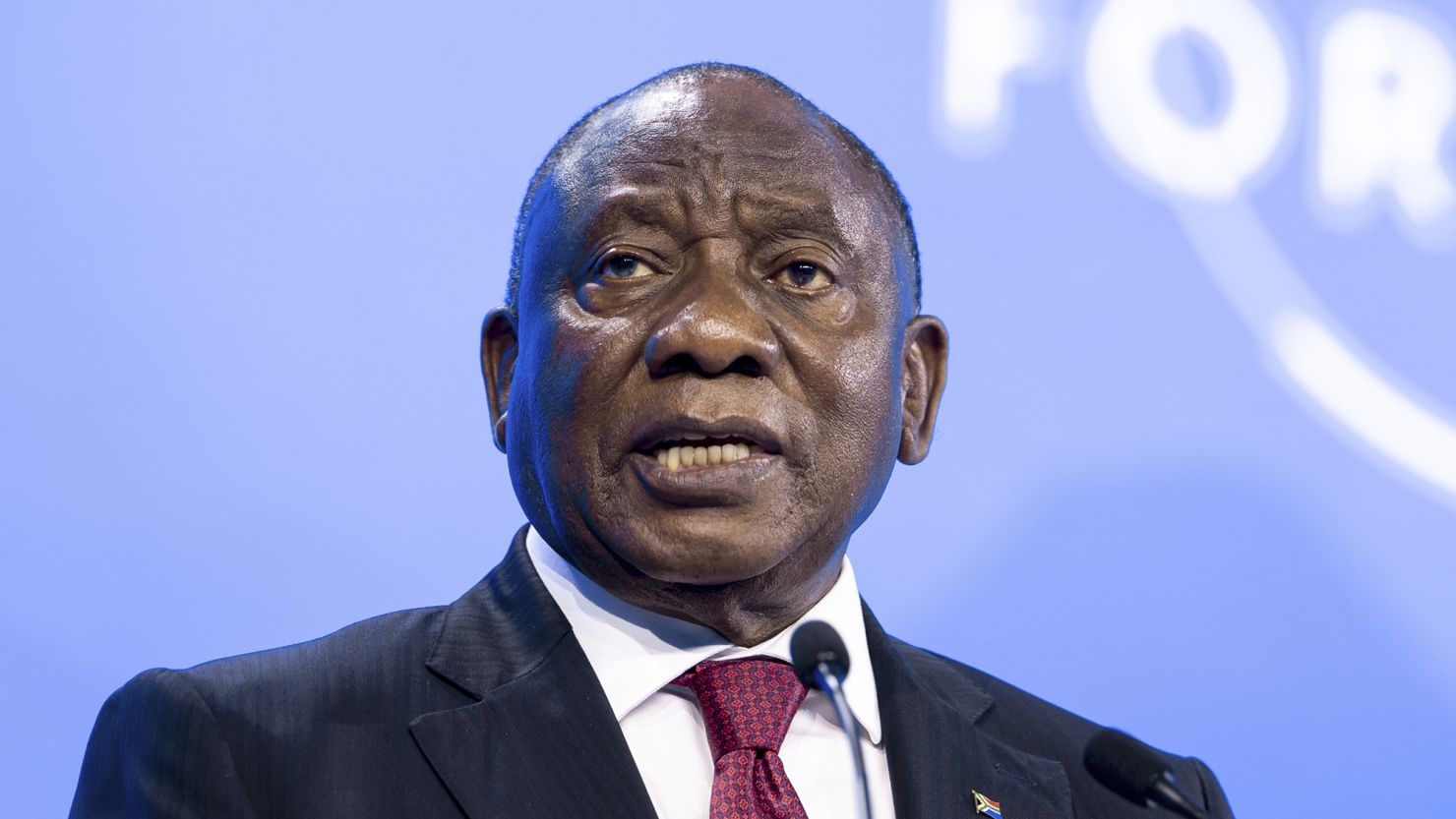
 President Cyril Ramaphosa has confirmed the South Africa US ambassador appointment, naming veteran politician and seasoned peace negotiator Roelf Meyer to represent Pretoria in Washington. The presidency announced the decision late Tuesday, April 14, 2026, filling a critical diplomatic void left after the expulsion of former envoy Ebrahim Rasool in March 2025. Confirming the decision, presidential spokesperson Vincent Magwenya stated that Ramaphosa had officially selected the 78 year old former apartheid era minister, placing him at the centre of a deliberate diplomatic reset between South Africa and the United States during President Donald Trump’s second term.
Meyer brings a distinct historical weight to the role. He is universally recognised as the chief negotiator for the white minority National Party government during the 1993 multi party talks. During that volatile period, he worked directly opposite Ramaphosa, who led the African National Congress delegation. The two men forged a durable working relationship that ultimately helped broker South Africa’s democratic transition. Meyer subsequently served as Minister of Constitutional Affairs in the government of national unity under Nelson Mandela. Following his departure from formal politics, he shifted his focus to global conflict resolution through his non profit organisation, the In Transformation Initiative, advising on peace processes in various international conflict zones.
Relations between Pretoria and Washington have faced sustained turbulence over the past year. Following Rasool’s declaration as persona non grata due to comments regarding US domestic politics, the ambassadorial seat in Washington remained empty. Bilateral friction intensified over divergent foreign policy positions, particularly South Africa’s stance on the Middle East, and contentious US refugee programmes targeting white South African farmers. Recently, Ramaphosa accepted the credentials of the newly installed US ambassador to South Africa, Leo Brent Bozell III. Bozell and Meyer held an initial meeting in Pretoria in March 2026, establishing an early rapport that the South African government now aims to formalise at the highest diplomatic level. Addressing his willingness to step into the fray, Meyer recently noted that sitting back and criticizing without taking action offers no real solutions to the country’s challenges.
This appointment is less about conventional diplomacy and more about strategic recalibration. Pretoria is explicitly deploying historical credibility to rebuild trust in a fractured bilateral relationship. By selecting Meyer, Ramaphosa is sending a seasoned negotiator capable of managing complex political dynamics without resorting to ideological posturing. The South African government recognises that global partnerships remain critical to its economic and political positioning, particularly concerning trade access and foreign direct investment. Meyer possesses the specific temperament required to navigate an unpredictable Washington apparatus.
Furthermore, Meyer holds deep networks across the global political spectrum. His background allows him to engage effectively with conservative elements in Washington who have previously criticised South African domestic policies. At the same time, his role in dismantling apartheid secures his credentials as a proponent of a rights based global order. He is uniquely positioned to articulate South Africa’s non aligned stance using a framework of conflict resolution rather than adversarial rhetoric. The choice of Meyer signals that experience and symbolism still matter in high stakes diplomacy. Pretoria is signaling a willingness to talk pragmatically, discarding the activist tone that characterised recent diplomatic missteps.
Beyond the immediate diplomatic remedy, leaning on a veteran of the 1990s transition exposes a structural weakness within South Africa’s current foreign service. The reliance on legacy figures suggests a deficit in the modern diplomatic corps when it comes to fielding candidates with the necessary gravitas to handle tier one global powers. While Ramaphosa’s decision ensures political continuity and centralises control over US relations directly within the presidency, it also reveals a limited pool of contemporary statecraft practitioners. It shows a government forced to look backwards to find individuals possessing both the absolute trust of the president and the international standing required for such a demanding and sensitive post.
Pretoria is attempting to redefine its engagement with Washington by shifting the primary interface from career diplomats to trusted political proxies. This structural adjustment implies that South Africa views its relationship with the United States as a specialized negotiation requiring direct presidential oversight. Ramaphosa is attempting to insulate the core economic relationship from the volatility of daily political disagreements, creating a buffer zone managed by an envoy who understands the mechanics of high pressure compromise. This strategy mirrors Ramaphosa’s domestic maneuvers, such as appointing Meyer as co chairperson of the National Dialogue eminent persons group in 2025, utilizing familiar allies to stabilize turbulent environments.
For this diplomatic reset to translate into structural stability, several operational solutions must follow the appointment. First, Meyer will need to completely depoliticise bilateral trade discussions, specifically regarding the African Growth and Opportunity Act. By framing trade as a mutually beneficial economic necessity rather than a political reward, the embassy can protect South African exports from the crosshairs of geopolitical disputes. South Africa needs the US market for its automotive and agricultural sectors, and securing these supply chains must be the primary objective regardless of the political climate in Washington.
Second, the diplomatic mission in Washington must foster deeper integration with the private sector. Cultivating relationships with US corporate leaders and institutional investors will create a secondary layer of advocacy for South Africa. This business diplomacy will help insulate bilateral ties from shifts in the political winds of the White House. Business continuity serves as a stabilizing force when political dialogue stalls, and Meyer’s extensive private sector network makes him exceptionally well suited to execute this strategy.
Third, Pretoria must establish clear, direct communication channels that bypass public rhetoric. Meyer’s expertise lies in backroom negotiations and quiet diplomacy. Utilizing these skills to preempt misunderstandings before they escalate into public diplomatic incidents will be vital. The embassy needs to function as an early warning system, addressing grievances behind closed doors and maintaining a steady, pragmatic dialogue with the State Department and key congressional committees. Resolving disputes quietly is the only viable method to manage relations with a highly reactive US administration.
South Africa is not merely filling a vacant office in Washington; it is deploying a legacy of compromise to navigate a divided global arena, proving that calculated pragmatism remains the most effective tool in modern statecraft.