oluwatosin oyeniyi
ABUJA, Nigeria — President Bola Tinubu has requested legislative approval for a new $7.7 billion external borrowing plan to partly finance Nigeria’s 2026 budget deficit, replacing an earlier proposal seeking more than $20 billion in foreign loans.
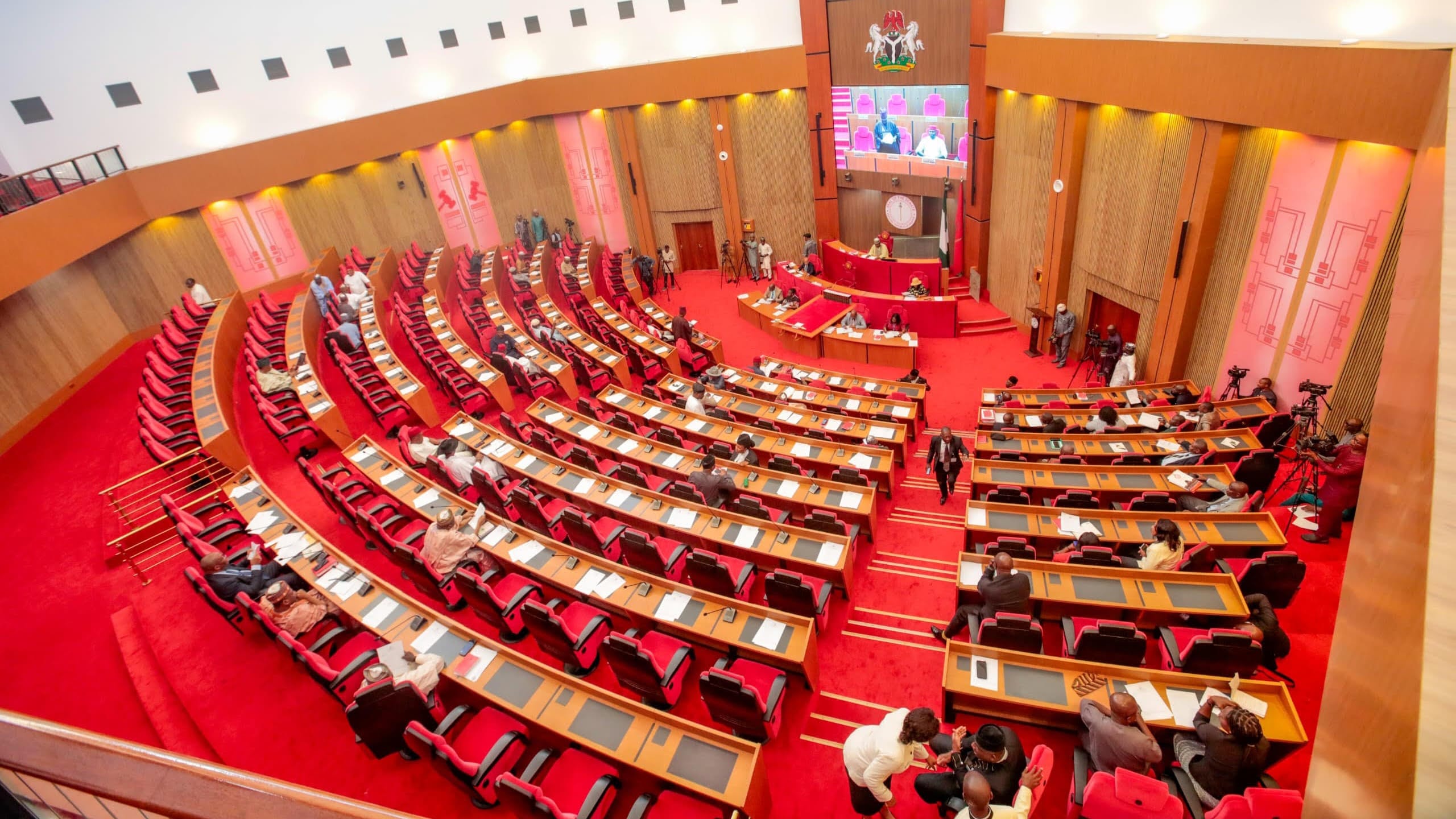
The revised request, amounting to $7,707,404,882.49 or approximately ₦10.79 trillion, was conveyed in a letter dated October 26, 2026, and read by Senate President Godswill Akpabio during plenary on November 4.
Tinubu’s latest proposal effectively withdraws his previous request for $20.52 billion and €1.045 billion under the 2026–2027 Supplementary External Borrowing Plan. The new submission provides a more specific financing framework and identifies the external borrowing component already included in the 2026 Appropriation Act.
Following its presentation, the Senate referred the request to its Committees on Local and Foreign Debts and Appropriations for further examination.
What the new borrowing will finance
According to the President’s communication, the proposed borrowing is intended to support projects and programmes contained in the 2026 national budget.
The identified priority sectors include infrastructure, defence and security, agriculture, healthcare, electricity and education.
The government says the financing will help implement capital projects, support economic reforms and address the country’s infrastructure needs.
The proposed external borrowing forms part of a wider ₦29.2 trillion borrowing provision in the 2026 Appropriation Act, which is intended to help finance a projected budget deficit of approximately ₦31.4 trillion.
The approved borrowing framework comprises ₦18.4 trillion in domestic borrowing and ₦10.79 trillion in external financing. The latest request seeks legislative authorisation for the external component.
Government favours Eurobond issuance
In outlining how the funds could be raised, Tinubu identified several possible financing sources, including loans from multilateral and bilateral institutions, International Monetary Fund facilities, bridge financing, international financial institutions and Eurobond issuance.
The government intends to explore these options simultaneously, considering their respective costs, benefits and the time required to access the funds.
However, the President indicated a preference for Eurobonds, describing them as a relatively faster way to raise substantial financing.
The final interest rates, repayment periods and other borrowing conditions will depend on prevailing market conditions when the funds are raised.
This means that although the proposed borrowing amount has been specified, the eventual cost of servicing the debt will depend partly on the terms secured by the government.
Why the earlier $20.5 billion request was withdrawn
The revised proposal comes barely a week after Tinubu submitted an earlier request seeking approval to process external loans worth $20.52 billion and €1.045 billion.
That proposal was presented to the Senate on October 27 under the 2026–2027 Supplementary External Borrowing Plan.
The earlier financing request covered infrastructure, agriculture, healthcare, education, water supply, security, employment generation and financial management reforms.
Senate President Akpabio said the new submission effectively superseded the previous request because it provided greater clarity about the government’s financing requirements and the different sources through which the funds could be obtained.
The revised amount is substantially lower than the previous proposal, although it remains a significant borrowing commitment for the Federal Government.
Nigeria’s growing debt obligations
The proposed borrowing has renewed attention on Nigeria’s public debt profile and the government’s capacity to meet its financial obligations while funding essential services.
According to the Debt Management Office, Nigeria’s total public debt stood at approximately ₦166.79 trillion as of June 30, 2026, compared with ₦159.35 trillion at the end of March 2026.
The debt figure includes obligations owed by the Federal Government and state governments, covering both domestic and external borrowing.
Nigeria’s debt has increased considerably in recent years as successive governments have relied on borrowing to finance budget deficits, infrastructure projects and other public expenditure.
Although debt levels are often assessed in relation to the size of an economy, analysts have also raised concerns about the country’s revenue capacity and the proportion of government income required to service existing obligations.
A limited revenue base can make it more difficult to meet repayment commitments while maintaining adequate funding for education, healthcare, infrastructure and social protection.
The latest proposal therefore places renewed emphasis on how borrowed funds will be deployed and whether the projects they finance can generate sufficient economic and social returns.
Legislative scrutiny and accountability
Under Nigeria’s Debt Management Office legislation, external borrowing arrangements require approval by the National Assembly.
The Senate committees reviewing the request are expected to examine the proposed financing framework, including its sources, terms and alignment with the approved national budget.
This process provides an opportunity for lawmakers to assess the government’s borrowing requirements and seek clarification on the projects expected to benefit.
Questions around transparency, repayment conditions, project selection and implementation will be important to determining the broader implications of the proposal.
For Nigerians, the central issue is not simply the amount being borrowed but whether the financing will translate into improved infrastructure, more reliable electricity, better healthcare, stronger agricultural production and other measurable development outcomes.
Balancing development financing with debt sustainability
Nigeria faces substantial development needs, including infrastructure gaps, electricity shortages, security challenges and pressure on public services. External financing can provide resources for projects that may otherwise be difficult to fund through current government revenue.
However, borrowing also creates future repayment obligations, particularly when funds are raised through commercial instruments such as Eurobonds.
The government will therefore need to balance its financing needs with the cost and risks associated with additional debt. Securing favourable borrowing terms, strengthening public revenue and ensuring that financed projects are properly implemented will remain important.
As the National Assembly begins reviewing the $7.7 billion proposal, attention will turn to the conditions attached to the borrowing and the specific projects expected to receive funding.
The decision will form part of a wider national conversation about how Nigeria finances development, manages public debt and ensures that borrowed resources deliver lasting value to its citizens.