oluwatosin oyeniyi
 When a government places a price on an enemy’s head, it is rarely a sign of strength. It is, more often, evidence that conventional military strategies have failed and that the state has run out of viable ideas.
Mali’s military junta understands this dynamic, even if it refuses to admit it. The military-run security ministry offered two billion CFA francs (approximately $3.5 million) for information leading to the “capture or neutralization” of Iyad Ag Ghaly, head of Jama’at Nusrat al-Islam wal-Muslimin (JNIM) and the most wanted man in the Sahel. A separate bounty of $2.5 million was placed on his deputy, Amadou Kouffa, alongside cash rewards for intelligence on secular Tuareg rebel leaders, including Alghabass Ag Intalla.
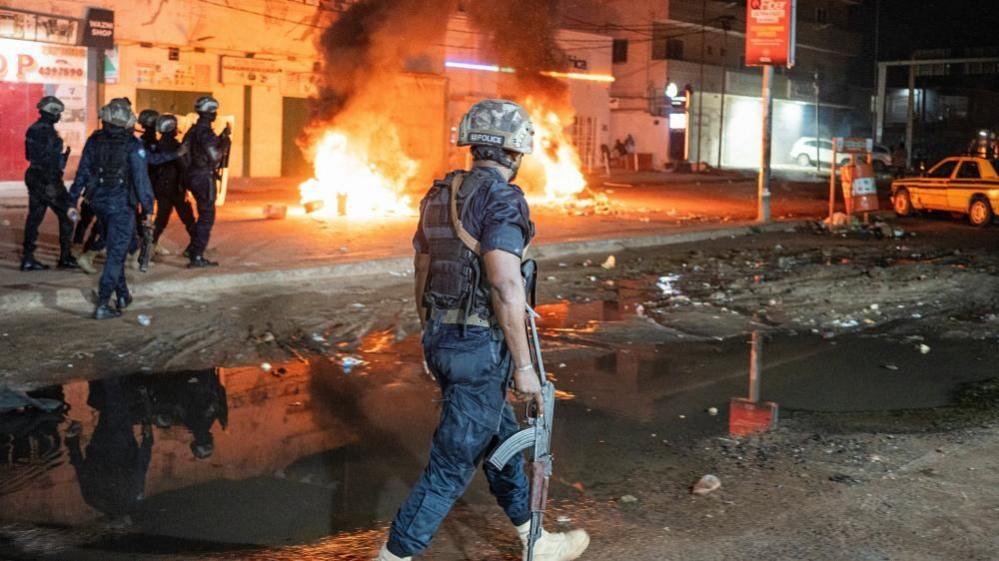
The announcement, read on national television by the security ministry under Major General Daoud Aly Mohammedine, came six weeks after an unprecedented disaster. In late April 2026, JNIM and Tuareg rebel forces launched a massive, near-simultaneous offensive that pierced the regime’s inner sanctum in Bamako and Kati, killing several high-ranking officials including Defense Minister Sadio Camara and sending the regime into a tailspin.
In the wake of this structural decapitation, the multi-million dollar bounty acts as a desperate rhetorical shield.
The Man They Cannot Find
To understand why a cash bounty is an empty gesture, it is necessary to understand how deeply rooted Iyad Ag Ghaly is within the Sahelian ecosystem. Born in 1954 in the Kidal Region, Ag Ghaly is not an isolated extremist hiding in a vacuum; he is a political chameleon who has spent four decades shifting roles:
- The Separatist Rebel: He fought in the 1990–1995 Tuareg rebellions against Bamako.
- The State Diplomat: He was once trusted enough by the Malian state to be appointed a diplomat to Saudi Arabia—a posting he used to build international networks
- The Jihadi Architect: By 2012, he founded Ansar Dine, and by 2017, he successfully orchestrated the merger of five militant factions to create JNIM, formalizing an alliance with al-Qaeda.
Evolution of Iyad Ag Ghaly’s Influence:
- 1990s: Secular Tuareg Rebel Leader (Tribal Legitimacy)
- 2000s: Appointed Malian Diplomat to Saudi Arabia (Consular Networks)
- 2012: Founder of Islamist Ansar Dine (Ideological Pivot)
- 2017–Present: Emir of al-Qaeda-linked JNIM (Sahelian Hegemony)
Ag Ghaly is on the United States terrorist list and faces an International Criminal Court arrest warrant. France spent billions of euros and sacrificed dozens of soldiers during its decade-long intervention trying to eliminate him. The United Nations deployed its deadliest peacekeeping mission (MINUSMA) to contain his expansion.
The assumption that a local cash bounty will succeed where French special forces, U.S. drone intelligence, and Western armies failed ignores the vast tribal, intelligence, and logistical networks safeguarding his movement.
JNIM’s Strategy of Asphyxiation
The April 2026 offensive was the culmination of a highly sophisticated “chokehold” strategy developed by JNIM over the preceding two years. Moving away from random rural attacks, the militant group systematically targeting Mali’s vital economic supply lines:
- Logistical Blockades: JNIM severed the primary trade corridors connecting landlocked Mali to vital coastal ports in Senegal and Côte d’Ivoire, trapping thousands of commercial shipping containers.
- Fuel Asphyxiation: By launching coordinated ambushes on fuel tanker convoys in the western mining region of Kayes, the group paralyzed national commerce and starved the capital of electricity and petroleum products.
- Intelligence Penetration: The April suicide assault on the Kati military base and the precise assassination of Defense Minister Camara required deep, insider intelligence. The fact that hundreds of fighters assembled around Bamako without triggering early warnings proves that the state’s internal security architecture is compromised.
The Total Failure of the Russia Gamble
The military junta, led by General Assimi Goïta, seized power in 2020 and 2021 on a populist promise to restore security by expelling Western partners. They forced out French troops, ejected the UN, and contracted Russia’s Wagner Group (now rebranded as the Africa Corps) to lead frontline counter-insurgency operations.
The limits of this mercenary model were exposed at the Battle of Tinzaouaten in July 2024, where separatist forces and JNIM ambushed a combined Malian-Russian column, killing roughly 80 Russian mercenaries. In retaliation, heavy-handed mercenary operations resulted in high civilian casualties, driving thousands of aggrieved rural youth directly into jihadist recruitment networks.
By mid-2026, the Africa Corps drastically scaled back its battlefield exposure due to personnel drawdowns driven by the ongoing war in Ukraine. Confronted with an unreliable ally and a resurgent rebel alliance that re-captured the strategic northern capital of Kidal in April, the junta has pivoted to bounty announcements to project an illusion of offensive action.
Structural Pathways to Durable Stabilization
A reward scheme cannot fix a broken state. To reverse its territorial decay, Mali must discard its reliance on transactional paramilitaries and implement baseline structural reforms:
- Revive the Spirit of the Algiers Peace Accords: Military action cannot erase sixty years of ethnic Tuareg grievances regarding northern economic marginalization. Bamako must re-open transparent diplomatic channels with the secular leadership of the Azawad Liberation Front (FLA) to detach them from their tactical marriage of convenience with al-Qaeda.
- Reconstruct Local Intelligence Networks: Coercive counter-insurgency operations that treat rural populations as enemy combatants destroy the human intelligence networks required to track guerrilla fighters. The state must retrain its military units to protect civilians, restoring the community trust needed to counter JNIM’s information dominance.
- Coordinate Regional Border Security Interoperability: Mali’s current isolationist stance from regional blocs like ECOWAS isolates its security apparatus. Security ministries across the Sahel and coastal West Africa must standardize real-time border tracking and joint counter-terrorism patrols to sever JNIM’s cross-border logistics lanes.
The Bottom Line
Mali’s multi-million dollar bounty is an admission of operational paralysis. It attempts to reduce a highly institutionalized, socially embedded, and structurally sophisticated insurgency down to a single high-value target.
True sovereignty cannot be purchased through an informant economy, nor can national defense be successfully outsourced to foreign mercenaries. Until Bamako addresses the political exclusions that fuel recruitment, the Sahel’s most wanted man will remain insulated by the very communities the state has abandoned.
Mali Defence Minister Sadio Camara killed during coordinated attacks : This news broadcast provides critical on-the-ground reporting and analysis detailing how the April 2026 offensive breached the junta’s inner sanctum, establishing the security backdrop that prompted the regime’s subsequent bounty announcements.