oluwatosin oyeniyi
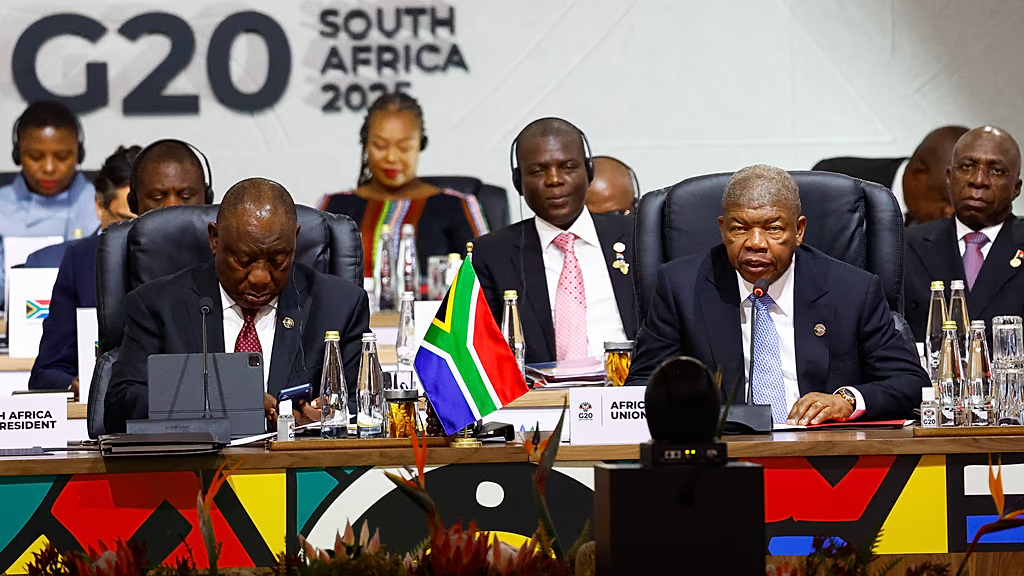
 Africa Day 2026 marks a significant milestone: the 63rd anniversary of the Organization of African Unity (OAU), now the African Union (AU). Commemorated between May 23-25, this year’s celebrations are held under the theme, “Sixty-three (63) Years of Unity, Integration and Development, let’s celebrate together”. This occasion provides a crucial opportunity to reflect on the continent’s journey towards self-determination, unity, and prosperity, while also critically examining the challenges that persist. As Africa navigates a complex global landscape, the AU’s role in fostering peace, security, economic integration, and good governance remains paramount. This article will delve into the AU’s achievements, the hurdles it faces, and the strategic pathways outlined in Agenda 2063 to realize the vision of “The Africa We Want”.
63 Years of Pan-Africanism: Achievements and Aspirations
Over the past 63 years, the journey from the OAU to the AU has been characterized by significant strides in continental integration and development. The organization has played a pivotal role in decolonization efforts, promoting self-determination, and fostering a sense of pan-African solidarity. Key achievements include the establishment of various continental institutions aimed at promoting peace, security, and economic cooperation.
The AU has demonstrated considerable agency in shaping Africa’s agenda and decisions, actively participating in global affairs . Initiatives such as the African Continental Free Trade Area (AfCFTA) stand as a testament to the continent’s commitment to economic integration, aiming to create a single market for goods and services across Africa Furthermore, the AU has been instrumental in developing frameworks for good governance, human rights, and conflict resolution, even if their implementation has faced challenges.
Beyond economic and political integration, the AU has also championed social development, with efforts in public health, education, and cultural preservation. The commemoration of Africa Day itself serves as a powerful symbol of this collective identity and aspiration for a united and prosperous Africa.
Navigating a Complex Landscape: Challenges to Unity and Development
Despite these achievements, the AU continues to grapple with a myriad of complex challenges that impede its vision of a united and prosperous Africa. Security realities remain a dominant concern, with ongoing conflicts in regions like Sudan and the eastern Democratic Republic of Congo (DRC), coupled with persistent terrorism in the Sahel, Horn of Africa, and Lake Chad Basin. The resurgence of unconstitutional changes of government in 2025 further underscores the fragility of democratic gains and the need for robust mechanisms to uphold constitutional order.
Economic integration, while a cornerstone of Agenda 2063, faces significant hurdles. The implementation of the AfCFTA, for instance, is hampered by challenges such as varying capacities among member states to implement and enforce the agreement, non-tariff barriers, and inadequate infrastructure. These issues make trade within Africa complicated and costly, hindering the full realization of a continental free trade area. Furthermore, external pressures and global economic shifts continue to impact African economies, often exacerbating existing vulnerabilities.
Institutional effectiveness also remains a critical area for improvement. While the AU has developed numerous frameworks and protocols, a persistent gap exists between ambitious declarations and coordinated, sustained implementation. Debates around the AU Peace Fund endowment and the functionalization of the African Court of Justice highlight the ongoing efforts to strengthen the institution, yet also reveal areas where consensus and action are still needed. The challenge of defining a cohesive African foreign policy, given the sovereign prerogatives of member states, also presents a complex diplomatic tightrope for the AU.
The Road Ahead: Agenda 2063 and Institutional Reforms
Central to the AU’s future trajectory is Agenda 2063, Africa’s blueprint and master plan for transforming the continent into a global powerhouse]. The launch of the Second Ten-Year Implementation Plan (2024-2033), dubbed the “decade of acceleration,” signifies a critical phase focused on translating policy into action and building on the convergence efforts of the first decade. This plan emphasizes sustainable and resilient infrastructure development, economic integration through initiatives like the AfCFTA, and strengthening governance mechanisms.
Institutional reforms within the AU are also gaining momentum, with leaders like Kenyan President William Ruto championing efforts to restructure the organization for greater effectiveness. President Ruto presented a report on AU Institutional Reforms at the 39th Ordinary Session of the AU Assembly in February 2026, emphasizing the urgency of these changes. Key proposals adopted included a harmonized African governance and peace and security architectures (APSA) implementation plan and enhanced coordination with the Committee of Ten and African UN Security Council members. While a proposal to increase the AU Peace Fund endowment from US$400 million to US$1 billion was noted, it awaits full consensus.
The 2026 AU theme, “Assuring sustainable water availability and safe sanitation systems to achieve the goals of Agenda 2063,” highlights a specific focus area for the year, linking directly to broader development objectives. These reforms and strategic plans are crucial for addressing the continent’s persistent challenges and ensuring that the AU can effectively lead Africa towards its long-term development aspirations.
Forward-Looking Perspective
To truly realize the aspirations of Agenda 2063 and overcome persistent challenges, the African Union and its member states must prioritize several key areas. Firstly, strengthening peace and security mechanisms is paramount. This involves not only robust responses to ongoing conflicts and terrorism but also proactive conflict prevention strategies and addressing the root causes of instability, such as governance deficits and socio-economic inequalities. The continued focus on institutional reforms, including the operationalization of the African Standby Force and the African Court of Justice, is crucial for enhancing the AU’s capacity to intervene effectively.
Secondly, accelerating economic integration through the AfCFTA requires concerted efforts to dismantle non-tariff barriers, harmonize regulatory frameworks, and invest in critical infrastructure that facilitates intra-African trade. Addressing the disparities in implementation capacity among member states is also vital, perhaps through targeted technical assistance and capacity-building programs. Furthermore, diversifying African economies beyond raw material exports and fostering value-added production can enhance resilience against global economic shocks.
Finally, promoting inclusive governance and citizen participation is essential for building sustainable development. This includes upholding democratic principles, strengthening human rights protections, and ensuring that development initiatives are responsive to the needs of ordinary Africans. The AU’s focus on themes like sustainable water availability and safe sanitation systems for 2026 demonstrates a commitment to addressing fundamental human needs, which are integral to broader development goals. By fostering greater transparency, accountability, and collaboration among governments, civil society, and the private sector, Africa can unlock its immense potential and build a more prosperous and equitable future.
CONCLUSION
As Africa Day 2026 is celebrated, the continent stands at a critical juncture, reflecting on 63 years of pan-African aspirations and charting a course for the future. The African Union has undoubtedly made significant strides in fostering unity, promoting integration, and advocating for Africa on the global stage. However, the persistent challenges of insecurity, economic disparities, and implementation gaps underscore the continuous need for robust institutional reforms, strategic policy interventions, and genuine political will. The vision of Agenda 2063—an integrated, prosperous, and peaceful Africa driven by its own citizens—remains a powerful guiding star. Realizing this vision will require sustained commitment to good governance, inclusive development, and a collective resolve to overcome the complex hurdles that lie ahead, ensuring that the next chapter of Africa’s journey is defined by even greater progress and self-determination.