oluwatosin oyeniyi
 An Accra High Court has sentenced Bernard Antwi Boasiako, popularly known as “Chairman Wontumi,” to 20 years in prison with hard labor. The ruling marks the first time a senior political figure has been convicted under Ghana’s updated legislative crackdown on illegal small-scale gold mining, locally known as galamsey.
The Verdict and Charges
Justice Audrey Kocuvie-Tay delivered the judgment following a protracted legal battle concerning operations conducted by Akonta Mining Company Limited, a firm owned by the politician.
The court found Boasiako and his company guilty on counts including the unlawful assignment of mineral rights without approval from the Ministry of Lands and Natural Resources. Furthermore, the court convicted him for facilitating unlicensed mining operations within protected forest reserves along the Samreboi concession.
During the trial, the state proved that unauthorized extraction activities severely degraded local ecosystems and major waterways. The court firmly rejected defense arguments claiming the arrangement was strictly limited to land reclamation.
By lifting the corporate veil, the court held Boasiako personally liable as the primary controller of Akonta Mining. In addition to the 20-year custodial sentence, the court imposed a fine of GH¢120,000 on Boasiako and fined Akonta Mining GH¢180,000.
Political Fallout and Legal Appeals
The severity of the sentence triggered immediate political waves across the country. The opposition New Patriotic Party (NPP), where Boasiako serves as the Ashanti Regional Chairman, strongly condemned the verdict.
Party leadership labeled the prosecution politically motivated, arguing that the judicial process targeted an opposition figure while ignoring wider issues in the mining sector. The NPP’s defense counsel announced immediate plans to appeal the conviction at the Court of Appeal.
Conversely, environmental coalitions and civil society groups welcomed the ruling as a victory for accountability. For years, activists argued that illegal mining operations continued with impunity because of the financial clout of political backers. Green groups view the judgment as proof that the law can apply uniformly, regardless of a perpetrator’s political status.
Broader Context of the Galamsey Fight
The timing of the ruling underscores the pressures facing Ghana, Africa’s leading gold producer, as it attempts to balance mining revenues with ecological protection. State authorities have increasingly turned to strict legal frameworks, including maximum penalties under the amended Minerals and Mining Act, to curb environmental devastation.
As the case moves to the appellate courts, the verdict serves as a defining test case for Ghana’s judicial independence. Whether this sentence becomes a permanent turning point against galamsey depends on higher court reviews and consistent enforcement across the political spectrum.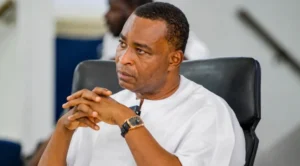
For a deeper dive into the legal arguments, watch this panel discussion on Galamsey Fight: Wontumi’s 20-Year Sentence Sparks Debate. This video provides crucial context regarding the political fallout, the legal validity of Akonta Mining’s concession leases, and the broader implications for environmental law enforcement across Ghana.