ViewPoints Africa Editorial Team
 Senegal finds itself at a critical political and economic juncture following former Prime Minister Ousmane Sonko’s announcement that his party, Pastef, will not participate in the newly formed government. This decision injects fresh uncertainty into a nation already grappling with a daunting debt crisis and delicate negotiations with the International Monetary Fund (IMF)]. The political reshuffle, which saw President Bassirou Diomaye Faye dismiss Sonko and dissolve the previous government, has raised concerns among analysts about potential delays in securing vital international financial assistance. This article will explore the intricacies of Senegal’s current political landscape, the severity of its debt crisis, and the precarious path ahead for its economic stabilization efforts amidst these internal divisions.
Political Turmoil and the New Government
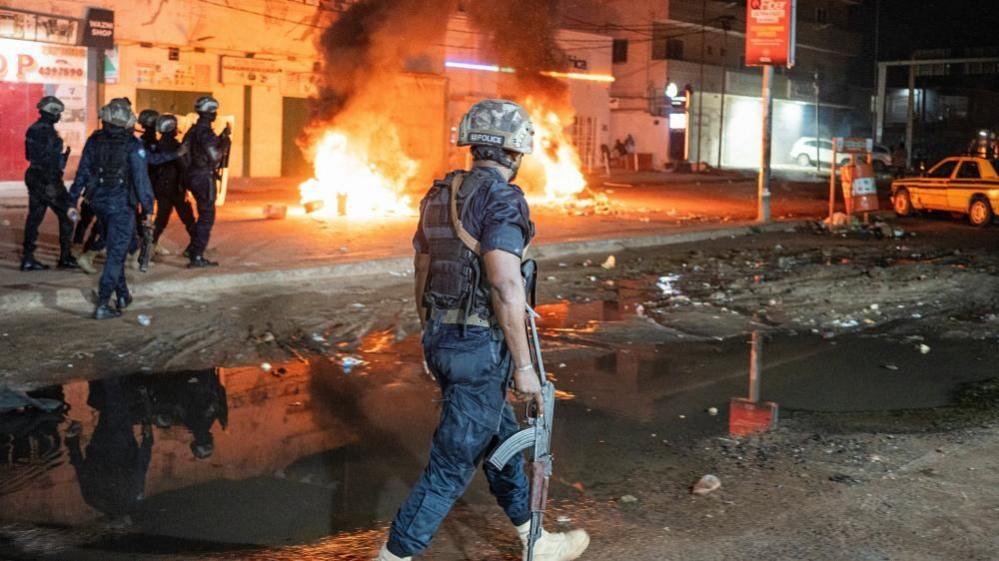
The recent political upheaval in Senegal began on May 22, 2026, when President Bassirou Diomaye Faye dismissed Prime Minister Ousmane Sonko and dissolved the entire government. This move, coming just weeks after their joint victory in the presidential elections, signaled a significant shift in the country’s political dynamics. Sonko, a charismatic figure and leader of the Pastef party, had been a vocal critic of the previous administration and was instrumental in Faye’s ascent to power.
However, the alliance quickly showed signs of strain. Sonko’s announcement on June 1, 2026, that his party would not participate in the new government, citing “points of disagreement” with President Faye, has intensified political uncertainty. This decision came just an hour before Ahmadou Al Aminou Lo, Sonko’s successor as prime minister, unveiled a new 30-member cabinet. While the new cabinet includes some Pastef members, Sonko’s public stance suggests a potential rift that could complicate governance.
Further exacerbating the situation, lawmakers, in a display of strong support for Sonko, reinstated him as a member of parliament and overwhelmingly elected him as Speaker of the National Assembly with the backing of 132 out of 165 members. This move positions Sonko with considerable ability to influence or even obstruct President Faye’s legislative agenda, creating a scenario of potential executive-legislative friction. The political landscape is now characterized by a delicate balance of power, with Sonko’s party holding a significant parliamentary majority, yet choosing to operate outside the executive branch.
The Shadow of Debt: Senegal’s Economic Vulnerabilities
The political upheaval unfolds against a backdrop of a severe debt crisis that has cast a long shadow over Senegal’s economic stability. The crisis came to light in mid-2024 with the discovery of materially underreported fiscal deficits and public debt by the previous administration [3]. Subsequent revisions revealed that public debt at the end of 2024 stood at an alarming 119% of GDP, with IMF estimates, which include additional public-sector liabilities, placing total public-sector debt at approximately 132% of GDP.
This revelation dramatically shifted Senegal’s debt risk profile from ‘moderate’ to a higher-risk position, leading the IMF to suspend disbursements under its $1.8 billion lending program. The suspension of IMF support has had direct implications for other multilateral lenders, with loans from institutions like the World Bank and the African Development Bank declining. Consequently, Senegal has effectively lost access to international capital markets, becoming increasingly reliant on domestic and regional market financing to cover its substantial gross financing needs.
Analysts warn that Senegal’s debt level is a rare outlier among developing countries, with historical data suggesting that countries with debt-to-GDP ratios above 100% rarely avoid restructuring or default without exceptional economic growth. The country’s external debt service to revenues is projected to remain above 50% from 2026 to 2028, significantly higher than the deemed ‘safe’ level of 23%, indicating a precarious fiscal situation. The economic literature suggests that avoiding restructuring in such circumstances is a narrow corridor, requiring massive consolidation and refinancing at unusually low rates, conditions that are politically challenging to sustain.
IMF Negotiations: A Precarious Path Forward
The political instability directly complicates Senegal’s ongoing negotiations with the IMF, which are crucial for stabilizing its economy and addressing the debt crisis. The IMF had frozen its $1.8 billion lending program after the discovery of misreported debt in 2024, and the country is now seeking to resume talks [2, 3]. Finance Minister Cheikh Diba has indicated that Senegal expects to restart discussions with the IMF in the week of June 8, with hopes of reaching an agreement on key points by June 30.
However, the political split, particularly Ousmane Sonko’s influential position as Speaker of the National Assembly and his party’s decision to remain outside the government, introduces significant uncertainty. Sonko has been a vocal critic of the IMF and has previously dismissed the possibility of debt restructuring. This stance could create friction with President Faye’s administration, which, while less vocal on the issue, needs to demonstrate a clear and unified approach to economic reforms to satisfy IMF requirements. Oxford Economics warns that Sonko’s intention to exercise strong parliamentary oversight could constrain the executive’s ability to implement reforms aligned with IMF demands.
The IMF’s primary concern will be the sustainability of Senegal’s debt and the government’s commitment to fiscal consolidation. Given the country’s high debt-to-GDP ratio, a debt restructuring, supported by the Common Framework, is often seen as the most viable path to recovery. However, political resistance to such measures could prolong the crisis, making it harder for Senegal to secure the necessary international financial support and potentially leading to further economic distress. The challenge for the new government will be to navigate these political divisions while presenting a credible and coherent economic strategy to its international partners.
Forward-Looking Perspective
Navigating Senegal’s current political and economic turbulence requires a delicate balance of political consensus-building and decisive economic action. Firstly, President Faye’s administration must prioritize fostering a constructive working relationship with Ousmane Sonko and the Pastef-dominated National Assembly. This could involve clear communication channels, defined roles for parliamentary oversight that do not impede executive function, and a shared understanding of national economic priorities. A unified front, or at least a functional one, is essential to present a credible and stable image to international partners like the IMF.
Economically, the immediate priority is to re-engage with the IMF and secure a new lending program. This will likely necessitate a clear and transparent commitment to fiscal consolidation and debt sustainability. While Sonko has expressed reservations about debt restructuring, the economic literature strongly suggests that for countries with Senegal’s debt profile, an early and comprehensive restructuring is often the most effective path to recovery. The government, led by Prime Minister Ahmadou Al Aminou Lo, an economist, will need to articulate a strategy that addresses the debt crisis head-on, potentially exploring options within the Common Framework for debt treatment while seeking to protect regional lenders.
Beyond immediate crisis management, Senegal needs to implement structural reforms that diversify its economy, enhance revenue collection, and improve public financial management to prevent future debt crises. Investing in key sectors, promoting good governance, and ensuring transparency in public spending will be crucial. The political leadership must also address the underlying socio-economic grievances that fuel political instability, ensuring that economic policies are inclusive and benefit all segments of the population. Ultimately, Senegal’s ability to emerge stronger from this period will depend on its leaders’ capacity to prioritize national interest over partisan divides and to implement sound, sustainable economic policies.
Senegal’s current political landscape, marked by the unexpected rift between President Faye and former Prime Minister Sonko, presents a significant test for the nation’s stability and economic future. While the immediate political maneuvering unfolds, the underlying debt crisis looms large, demanding urgent and coordinated action. The success of ongoing IMF negotiations, crucial for unlocking vital financial support, hinges not only on the technical aspects of economic reform but also on the ability of Senegal’s political leadership to forge a unified and credible path forward. Navigating these turbulent waters will require a commitment to transparent governance, a willingness to prioritize national economic stability over partisan interests, and a strategic approach to debt management that ensures long-term sustainability. The choices made in the coming weeks and months will undoubtedly shape Senegal’s trajectory for years to come, impacting its citizens and its standing in the regional and global economy.