oluwatosin oyeniyi
 Benin began the formal tabulation of results on April 13, 2026, following a presidential election that saw over 7.9 million registered voters participate in a contest designed to consolidate the political legacy of outgoing President Patrice Talon. Early returns from the Autonomous National Electoral Commission (CENA) indicate that Finance Minister Romuald Wadagni holds a commanding lead, positioning the veteran technocrat as the likely successor in a transition defined by administrative precision and a tightly curated political landscape. The electoral process, while largely peaceful across the southern coastal hubs, took place against a backdrop of persistent security threats in the northern border regions and a national debate over the cost of the country’s aggressive infrastructure modernization. The ascension of Romuald Wadagni represents the culmination of a decade-long restructuring of Beninese governance. Since 2016, the administration of Patrice Talon has moved away from the fragmented, multi-party consensus model that once characterized the country as a regional democratic beacon, favoring instead a highly centralized, performance-oriented executive. Wadagni, who served as the architect of Benin’s lauded entry into international capital markets and managed the country’s high-growth fiscal policy, was handpicked to ensure that the “Rupture” program continues without the volatility often associated with African leadership changes. The 2026 vote was the first under revised electoral codes that required candidates to secure sponsorships from elected officials, a move that effectively streamlined the field in favor of established parties aligned with the presidency.
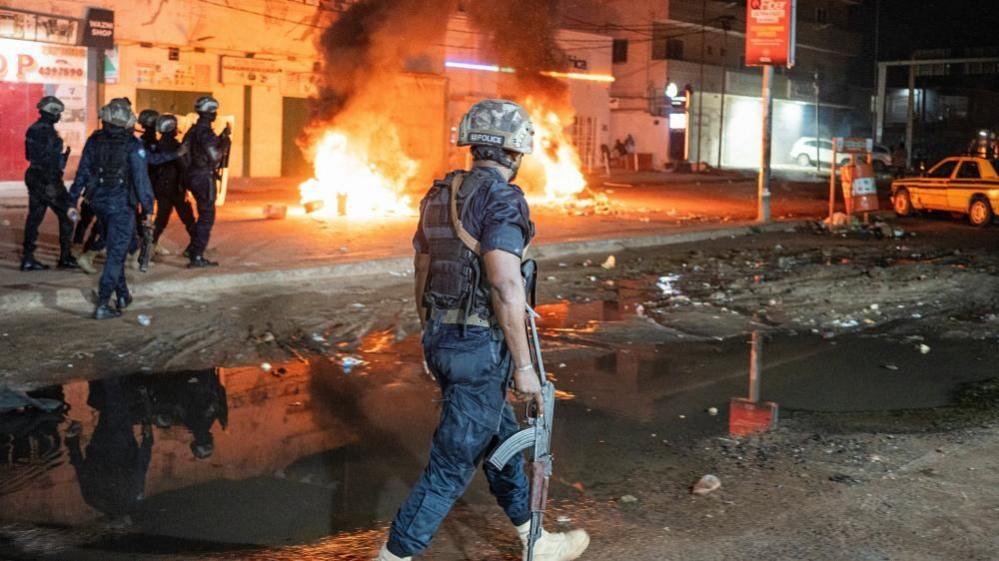
The political environment leading to this vote remained marked by the absence of several prominent opposition figures, many of whom remain in exile or face legal constraints following the contentious legislative and presidential cycles of 2019 and 2021. While the 2023 legislative elections saw a partial return of opposition voices to the National Assembly, the 2026 presidential contest was largely framed as a referendum on the efficiency of the state rather than a choice between competing ideologies. This shift toward a “developmental autocracy” model mirrors trends seen elsewhere in the region, where the delivery of tangible infrastructure—new roads, the expansion of the Port of Cotonou, and the creation of the Glo-Djigbé Industrial Zone—is used to justify the narrowing of the traditional democratic space. The significance of this election extends far beyond the immediate transfer of power within the ruling coalition. It marks a test of whether a technocratic successor can maintain the social contract in the face of two primary structural vulnerabilities: the spillover of Sahelian instability and the fragility of a cotton-dependent economy. In the northern departments of Atacora and Alibori, the threat of jihadist incursions from across the borders of Burkina Faso and Niger has transitioned from a peripheral concern to a central national security priority. For the incoming administration, the challenge lies in maintaining the high levels of foreign investment required for urban development while simultaneously funding a massive security expansion to prevent the rural north from becoming a corridor for extremist groups.
Beyond the security architecture, the election serves as a pivot point for Benin’s economic sovereignty. Under Wadagni’s tenure as Finance Minister, the country achieved one of the highest growth rates in West Africa, but this growth has been heavily reliant on debt-financed public works and the re-export trade with Nigeria. The broader implication is that Benin is attempting to leapfrog from a frontier market to a logistics and manufacturing hub without the traditional safety valves of political pluralism. If the transition remains stable, it will provide a blueprint for other middle-income African nations seeking to institutionalize “Talonism”—a blend of private sector logic, fiscal discipline, and centralized political control. However, the concentration of power remains a systemic risk; the lack of a robust, institutionalized opposition means that popular grievances over the rising cost of living or land displacement have few formal outlets for expression. Addressing these structural weaknesses requires a recalibration of the relationship between the state and its peripheral regions. A primary solution for the incoming government is the acceleration of the “Social Rupture” policy, which must move from a campaign slogan to a measurable fiscal priority. This involves decentralizing the industrial gains of the south toward the northern agro-pastoral zones. By establishing secondary processing hubs for cashew and cotton in the north, the state can provide the economic resilience necessary to counter the recruitment efforts of extremist groups. Security cannot be achieved through military “Operation Mirador” alone; it requires the restoration of state services and economic opportunity in areas that feel neglected by the Cotonou-centric growth model.
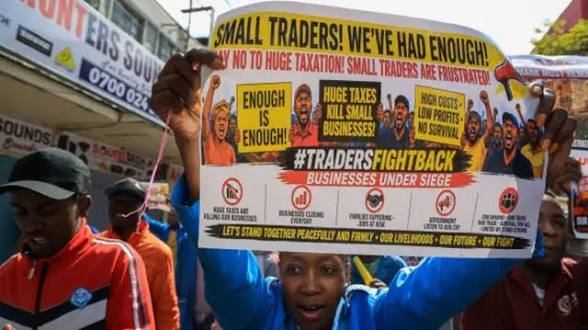
Furthermore, the government should consider a phased liberalization of the political space to reduce the risk of future systemic shocks. Restoring the eligibility of a broader range of political actors for municipal and legislative roles would act as a pressure valve, allowing for a more inclusive national dialogue. True political continuity is best served by institutions that can survive a single party or leader, rather than those that depend on the exclusion of dissent. Integrating opposition voices into the oversight of the Glo-Djigbé Industrial Zone and other major state projects would increase transparency and reduce the perception of cronyism that often dogs centralized administrations. Economically, the new administration must pivot toward aggressive debt management and revenue diversification. While Benin’s credit ratings are stable, the reliance on international bonds leaves the treasury vulnerable to global interest rate fluctuations. The solution lies in domestic resource mobilization—specifically, the formalization of the vast informal trade network that operates along the Nigerian border. By creating digital tax incentives and simplifying business registration for small-scale traders, the state can broaden its tax base without stifling the entrepreneurial energy that sustains the majority of the population.
The orderly conduct of the vote suggests that Benin has successfully institutionalized its new administrative order. As the results are finalized, the focus shifts from the mechanics of winning an election to the complexities of managing a nation that is increasingly integrated into the global economy but remains socially and geographically bifurcated. Stability in Benin is no longer guaranteed by the noise of a vibrant democracy, but by the quiet efficiency of a state that must now prove it can deliver prosperity to its most distant corners.