Sudan is grappling with a humanitarian crisis of unprecedented scale, as ongoing conflict continues to fuel mass displacement, severe food insecurity, and a catastrophic collapse of essential services. Aid agencies and international organizations are issuing urgent warnings, highlighting that parts of the country are teetering on the brink of famine, with millions facing acute hunger and a dire risk of severe malnutrition, particularly among children. This crisis, exacerbated by limited humanitarian access and a severe funding shortfall, has turned Sudan into the world’s largest displacement crisis and one of its most severe humanitarian emergencies.
A Crisis of Unprecedented Scale: Displacement and Starvation
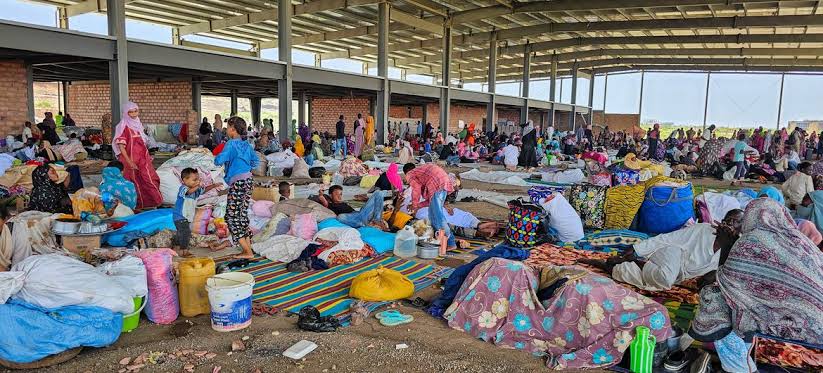
The conflict in Sudan, which erupted in April 2023, has created the world’s largest displacement crisis, with approximately 14 million people forced from their homes [2, 3]. Of these, over 8.8 million remain internally displaced within Sudan, while more than 4 million have sought refuge in neighboring countries, primarily women and children. This mass exodus has left millions vulnerable, struggling to access basic necessities like clean water, food, and healthcare.
The scale of hunger is equally alarming. Nearly 20 million people across Sudan are facing acute hunger, with over 5 million experiencing emergency levels of food insecurity. Around 135,000 individuals are already living in catastrophic conditions, characterized by extreme food shortages, acute malnutrition, and a heightened risk of death. The UN World Food Programme (WFP), the Food and Agriculture Organization (FAO), and UNICEF have warned that 14 areas across Darfur and Kordofan remain at risk of famine in the coming months if fighting intensifies and humanitarian access deteriorates.
Personal Stories of Survival:
The human toll of this crisis is starkly illustrated through individual narratives. Altuma, a 46-year-old mother, was forced to flee her home in Khartoum with her nine children, enduring multiple displacements. Now in Gedaref, they reside in temporary housing, battling harsh weather conditions and the constant struggle for survival. Her story is a example of the millions grappling with the daily realities of displacement and the loss of their livelihoods.
Similarly, Fairuz Faiz Deng, 60, arrived at a transit center in Renk, South Sudan, in May 2023, having fled with her brother and grandchildren. These transit centers, while offering temporary respite, are often overwhelmed, stretching the resources of host communities and aid agencies alike.
Children are disproportionately affected, with an estimated 825,000 under five expected to suffer from severe acute malnutrition in 2026, a 25% increase compared to pre-conflict levels. UNICEF Executive Director Catherine Russell describes these children arriving at overstretched facilities “too weak to cry,” a harrowing testament to the severity of the crisis. Between January and March 2026 alone, nearly 100,000 children were admitted for treatment for severe acute malnutrition. These are not just statistics; they represent individual lives hanging in the balance, underscoring the urgent need for intervention.
The Collapse of Basic Services: Health, Education, and Protection
The conflict has systematically dismantled Sudan’s essential public services, pushing its health system to the brink of collapse. More than 70% of the country’s hospitals have been destroyed or rendered non-functional, leaving millions without access to critical medical care. This breakdown has led to a surge in preventable diseases, with repeated outbreaks of cholera, measles, and malaria, further compounding the crisis, especially for vulnerable populations like young children and pregnant women. The World Health Organization (WHO) reported that as of January 2026, 37% of health facilities remained non-functional, and there have been 201 verified attacks on healthcare, resulting in 1858 deaths and 490 injuries.
Beyond healthcare, the crisis has severely impacted access to safe water and sanitation. Approximately 17 million people lack safe drinking water, and 24 million do not have adequate sanitation, creating fertile ground for disease transmission. The conflict has also deprived millions of Sudanese children of an education, with over 90% of the country’s 19 million school-age children out of school.
Impact on Women and Children:
Women and children bear a disproportionate burden of the crisis. The collapse of healthcare services puts new mothers at severe risk, as access to essential reproductive care has become nearly impossible. Gender-based violence (GBV) has tripled in two years, with widespread reports of intimate partner violence, sexual exploitation, abuse, and trafficking. Human rights organizations, like the SEEMA Centre for the Protection of Women and Children, have documented severe violations, including torture, rape, and other forms of sexual violence affecting women, men, and children. Dr. Nahid Jibrallah, founder of SEEMA Centre, highlights that “torture is used as a weapon to control communities including sexual abuse and also trafficking”. These atrocities are often committed with impunity, further deepening the trauma and vulnerability of survivors.
Almas, a 28-year-old mother displaced from Khartoum, exemplifies the struggle for basic health. She relies on vital support from an IRC nutrition specialist in Gedaref for her son Hermon, highlighting the critical role of aid in a collapsed health system. The widespread violence and lack of protection have also made aid workers themselves targets, with doctors, lawyers, health personnel, and human rights activists facing threats, detention, torture, and even death for carrying out their work.
The Struggle for Aid: Access Constraints and Funding Gaps
The delivery of humanitarian aid in Sudan is severely hampered by a confluence of factors, including active conflict, bureaucratic restrictions, and direct attacks on aid workers and supply routes. These constraints prevent assistance from reaching many of the worst-affected communities, exacerbating an already dire situation. The UN Office for the Coordination of Humanitarian Affairs (OCHA) consistently reports on the challenges to humanitarian access, citing violence against personnel and assets as a major impediment.
Challenges Faced by Aid Agencies:
- Insecurity and Violence: Active fighting and violence against aid workers, predominantly national staff, make it extremely dangerous to operate in many regions, particularly Darfur and Kordofan. The WHO has verified 201 attacks on healthcare since April 2023, highlighting the extreme risks faced by those trying to provide assistance.
- Bureaucratic Obstacles: Aid agencies frequently encounter bureaucratic hurdles, including delays in obtaining necessary permits and approvals, which slow down the delivery of critical supplies.
- Attacks on Supply Routes: Supply routes are often targeted, leading to the destruction or diversion of aid, further limiting the reach of humanitarian efforts.
- Funding Shortfalls: Despite the immense scale of the crisis, humanitarian operations in Sudan remain severely underfunded. By April 2026, only 20% of Sudan’s Humanitarian Needs and Response Plan for 2026 had been funded. This significant gap means that aid agencies are unable to scale up their operations to meet the escalating needs.
For instance, while UN agencies and partners aimed to reach 4.8 million people each month between February and May 2026, only about 3.1 million received assistance in February. This disparity underscores the critical need for increased international funding and unimpeded access to prevent further loss of life and widespread starvation, especially as the lean season between June and September is expected to worsen food shortages. The International Rescue Committee (IRC) Country Director, Richard Data, warns that without urgent action, “this crisis will continue to spiral further out of control, with consequences that continue to be felt far beyond Sudan”.
Forward-Looking Perspective
Addressing Sudan’s multifaceted humanitarian crisis requires a concerted and immediate effort from the international community, coupled with a genuine commitment from all parties to the conflict. Several critical interventions are necessary to alleviate suffering and pave the way for a more stable future:
Firstly, an immediate and sustained cessation of hostilities is paramount. Without a durable ceasefire, humanitarian access will remain constrained, and the cycle of violence, displacement, and starvation will continue. Diplomatic pressure from regional and international actors must be intensified to compel warring factions to prioritize civilian protection and engage in meaningful peace negotiations.
Secondly, unimpeded humanitarian access must be guaranteed across all regions of Sudan. This includes removing bureaucratic impediments, ensuring the safety of aid workers, and protecting supply routes. Aid agencies require safe and predictable corridors to deliver life-saving assistance to the most vulnerable populations, particularly in hard-to-reach areas like Darfur and Kordofan.
Thirdly, there is an urgent need for increased and sustained international funding. The current funding shortfall is severely limiting the capacity of humanitarian organizations to respond to the escalating needs. Donors must step up their commitments to meet the targets outlined in Sudan’s Humanitarian Needs and Response Plan, ensuring that aid agencies have the resources to provide food, medical care, water, and sanitation services.
Fourthly, strengthening local capacities and resilience is crucial for long-term recovery. This involves supporting local aid organizations, empowering communities to cope with shocks, and investing in early recovery initiatives that help people rebuild their livelihoods. As FAO Director-General Qu Dongyu emphasized, scaling up emergency agricultural assistance is vital to boost local food production and prevent further loss of life.
Finally, accountability for human rights violations must be pursued vigorously. Documenting atrocities, ensuring justice for victims, and holding perpetrators accountable are essential steps towards breaking the cycle of violence and fostering lasting peace. As Dr. Nahid Jibrallah of the SEEMA Centre highlights, “What we need is not to compromise human rights for any political agenda”. The international community must ensure that the world does not turn a blind eye to the suffering in Sudan, advocating for human rights and justice as integral components of any peace process.
Conclusion
Sudan stands at a critical juncture, facing a humanitarian crisis of immense proportions that demands urgent and sustained global attention. The narratives of individuals like Altuma and Fairuz, and the harrowing statistics of child malnutrition and gender-based violence, paint a stark picture of a nation in profound distress. The conflict has not only devastated lives and livelihoods but has also systematically dismantled the very infrastructure designed to protect and sustain its people.
The international community has a moral imperative to act decisively. This includes not only providing immediate humanitarian aid but also exerting significant diplomatic pressure to achieve a lasting ceasefire, ensuring unimpeded access for aid organizations, and holding perpetrators of human rights violations accountable. Without these concerted efforts, the crisis in Sudan risks spiraling further, with catastrophic consequences for millions and profound implications for regional stability. The time for the world to turn its attention to Sudan is now, to prevent further loss of life and to support the resilience and recovery of its people.