oluwatosin oyeniyi
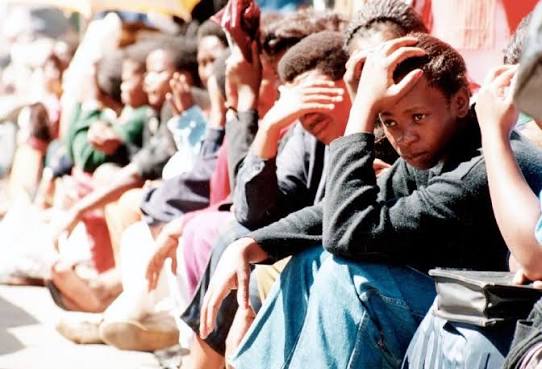
Nigeria’s education debate has been jolted by two figures released in recent weeks: about ₦267 billion in previously released basic-education intervention funds remained unutilised as of August 2026, while around 70 per cent of primary-school-age children could not read and understand a simple text, according to the Universal Basic Education Commission, UBEC.
The figures are connected, but they do not prove that every unused naira would automatically make children literate. The literacy statistic is a learning-poverty measure: it assesses whether children understand a simple passage, not whether they recognise no words. The funding figure refers to released intervention funds accumulated across basic education, not one year’s national budget.
Those qualifications make the story more serious. Nigeria is struggling to convert public resources into learning.
A system that can release money but not results
UBEC Executive Secretary Aisha Garba said the unused funds included more than ₦65 billion in counterpart funding that states had yet to access. Her warning was pointed: funding cannot improve education while it remains in government accounts.
The disclosure came during a technical workshop under the World Bank-assisted Human Capital Opportunities for Prosperity and Equity–Governance Programme, known as HOPE-GOV. The programme is designed to strengthen state planning, budgeting, execution and accountability in basic education and primary healthcare. Its approach recognises a recurring Nigerian problem: a budget may be approved, but the chain from policy to procurement, construction, teacher support and classroom learning often breaks before children benefit.
Nigeria’s challenge is therefore partly administrative. States may struggle to prepare credible plans, meet counterpart-funding conditions, procure transparently, supervise projects or report results. Political changes can interrupt priorities, while weak data makes it difficult to know which schools need teachers, materials, rehabilitation or remedial support most urgently.
But capacity is not the whole explanation. Under-execution also reflects political choices. A governor may announce new buildings because they are visible, while teacher coaching, early-grade reading materials and classroom assessment produce less dramatic headlines. Education budgets can then reward activity—contracts awarded, classrooms painted, funds accessed, rather than outcomes such as children reading, writing and counting at the expected level.
The national average hides unequal childhoods
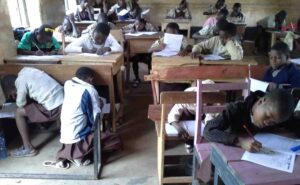
UNICEF’s 2026 analysis of public finance for basic education shows how unequal the system is. In expenditure data from 13 states, per-pupil education spending ranged from ₦3,788 in Bauchi to ₦18,849 in Ebonyi. The share of state spending devoted to education ranged from 8 per cent in Bauchi to 33 per cent in Enugu.
The same report found that 30 per cent of state education budgets were not spent in 2021, citing delays in disbursement and weak execution capacity. It also found that 28 per cent of 72 primary schools surveyed had no budget or expenditure in the 2022/23 school year, while schools that did spend raised an average of about ₦2,000 per pupil from other sources.
This is where national averages conceal lived reality. A child in a well-served urban school and a child in a rural or conflict-affected community may both be counted as Nigerian pupils, yet face entirely different learning conditions. UNICEF’s separate foundational-literacy analysis found that functional literacy among children completing Grade 5 was 89 per cent in Lagos but only 14 per cent in Sokoto. Such a gap cannot be solved by announcing a national allocation without targeting where disadvantage is concentrated.
Why literacy matters beyond the classroom
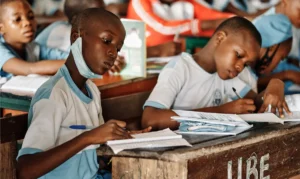
A child who cannot read with understanding is less able to follow health information, interpret prices, complete forms, use digital services or compete for skilled work later in life. Poor foundational learning also makes every subsequent education reform more expensive. Students who reach secondary school without reading fluency need remedial instruction, while teachers must divide attention between the curriculum and basic skills that should have been secured earlier.
Nigeria’s education crisis is therefore a human-capital crisis and a national-productivity crisis. A country with a large young population cannot turn demographics into economic strength if millions of children leave primary school without foundational skills.
Programmes offer a test of implementation
The government and its partners are not without new tools. HOPE-GOV is a US$500 million World Bank-supported programme, with US$480 million linked to performance results and US$20 million for coordination, verification, monitoring and technical assistance. All 36 states and the Federal Capital Territory expressed interest in participating, while the programme’s public tracker shows states must meet annual eligibility criteria to access performance-based funding.
UBEC has also cited revised intervention guidelines, a needs-based funding formula and a 2026–2035 strategic roadmap built around a whole-school approach. These initiatives could improve discipline if they are used to direct funds towards actual learning gaps rather than simply adding another layer of plans.
From spending targets to learning contracts
The immediate priority should be a public audit of the ₦267 billion. Citizens need to know how much belongs to each state, how long it has remained unused, why it was not accessed or spent, and whether funds should be reallocated when deadlines are missed. States should publish school-level project maps, procurement information and completion dates in formats parents and communities can understand.
Finally, communities must have a role in monitoring schools. Parent groups, traditional institutions, civil-society organisations and local media can help verify whether textbooks arrived, teachers are present and projects exist beyond official paperwork.
Conclusion
The ₦267 billion revelation is not merely an indictment of unspent money. It is a warning that Nigeria’s education system can absorb political attention without reliably producing learning. The 70 per cent estimate should be read carefully, but its underlying message is unmistakable: too many children reach the age when they should be reading and remain unable to understand simple text.
Nigeria does need more and better-targeted education funding. Yet the decisive reform is to make every naira answerable to a child’s progress. Until budgets are linked to transparent execution and measurable learning, increased allocations will continue to sound like investment while classrooms deliver too little change.