oluwatosin oyeniyi
NAIROBI, Kenya — Kenya’s medical workers’ union has called for urgent measures to protect health professionals after the country confirmed its first imported case of Bundibugyo virus disease, a form of Ebola, in a Kenyan man who died after returning from the Democratic Republic of Congo.
The Kenya Medical Practitioners, Pharmacists and Dentists Union (KMPDU) said health workers must be treated as a first line of protection in the country’s response rather than becoming a vulnerable point of transmission.
“Our health workers must not be the weakest link in our response. They must be of first line of protection,” the union’s Secretary-General, Dr Divji Atellah, said in a statement on Tuesday.
The call came after Health Cabinet Secretary Aden Duale confirmed the case and said the 40-year-old Kenyan man had died in Nairobi on Monday evening.
Patient Travelled From DRC Through Uganda
The patient had been living in the DRC, where he became ill and received treatment before travelling by road to Kampala, Uganda, on October 2.
He then flew to Nairobi on October 3 and was taken to a hospital, where he was quickly isolated. Laboratory tests conducted by Kenya’s National Virology Reference Laboratory and the Kenya Medical Research Institute confirmed infection with Bundibugyo virus.
Despite supportive treatment, he died on the night of October 5 and was buried under Kenya’s safe and dignified burial protocol.
The case makes Kenya the fourth country linked to the current Bundibugyo virus outbreak, which began in the DRC and has also affected Uganda. Uganda ended its latest outbreak in August.
Health Workers Face Particular Risk
KMPDU has urged the government to immediately monitor healthcare professionals who came into contact with the patient and provide them with psychological support and appropriate follow-up.
The union also called for rigorous contact tracing and adequate preparedness at health facilities.
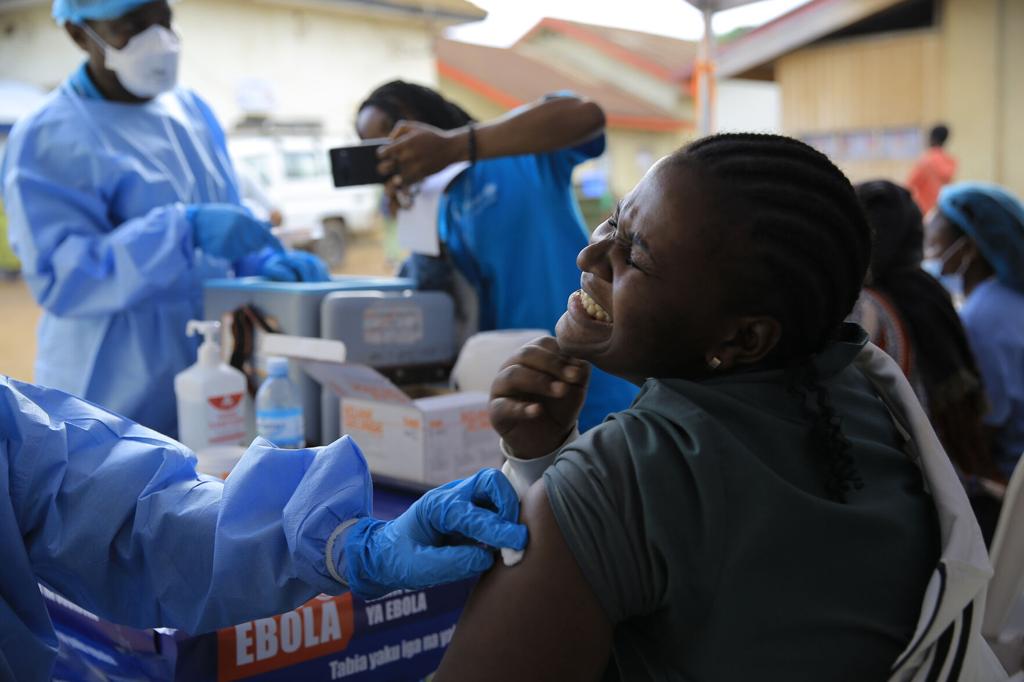
Healthcare workers are particularly vulnerable during Ebola outbreaks because transmission can occur through direct contact with blood or other bodily fluids of infected people. Protecting medical staff therefore requires appropriate infection-prevention measures, personal protective equipment, isolation capacity and clear procedures for handling suspected cases.
WHO says Kenya has already identified and assessed isolation units across 27 high-risk counties and trained around 5,000 health workers in Ebola prevention and management.
Contact Tracing Underway
Kenyan authorities initially identified 28 contacts, including family members and healthcare workers, while also tracing people who travelled on the same flight as the patient.
WHO says Kenya has intensified case investigation and contact monitoring, alongside screening at high-risk points of entry and public risk communication.
The government has also prepared quarantine arrangements for people considered at risk.
As of the latest reports, no additional positive cases had been confirmed.
The response is particularly important because the patient travelled internationally while symptomatic, passing through Uganda before reaching Kenya. The episode has raised questions about the ability of border-screening systems to detect infections when symptoms are difficult to identify or have been masked by medication.
Kenya Had Been Preparing for Ebola
Although this is Kenya’s first confirmed Bundibugyo virus case, authorities had been preparing for the possibility of an imported infection.
Kenya increased surveillance after Ebola outbreaks were reported in the DRC and Uganda earlier this year. WHO says more than 652,000 travellers entering Kenya had been screened by October 6, while 267 suspected samples had been tested.
The country has also conducted Ebola simulation exercises, strengthened surveillance systems and established rapid-response training programmes.
Those preparations are now being tested by an actual imported case.
A Regional Health Challenge
The case also demonstrates how quickly infectious diseases can cross borders in a region where people routinely travel between neighbouring countries for business, family and other reasons.
Uganda, which shares a border with both Kenya and the DRC, declared its latest Bundibugyo outbreak over in August. The DRC, meanwhile, continues to manage an active outbreak.
For Kenya, maintaining cooperation with Uganda and the DRC will be important for tracking contacts, sharing epidemiological information and identifying new cases early.
WHO is supporting Kenya’s response, including surveillance, laboratory work, risk communication and infection-prevention measures.
Protecting the Response
The immediate priority is to determine whether the deceased patient infected anyone during his journey or after arriving in Kenya.
That makes contact tracing, monitoring and rapid isolation critical.
But the KMPDU warning highlights another essential part of containment: protecting the people responsible for treating suspected and confirmed cases.
Kenya’s preparedness measures provide an important foundation, but sustained vigilance will be necessary as authorities monitor contacts and the wider region.
For now, the country has one confirmed imported case and one death. Whether the outbreak remains contained will depend heavily on how quickly authorities identify potential infections, support exposed health workers and maintain strong coordination across borders.