deshola
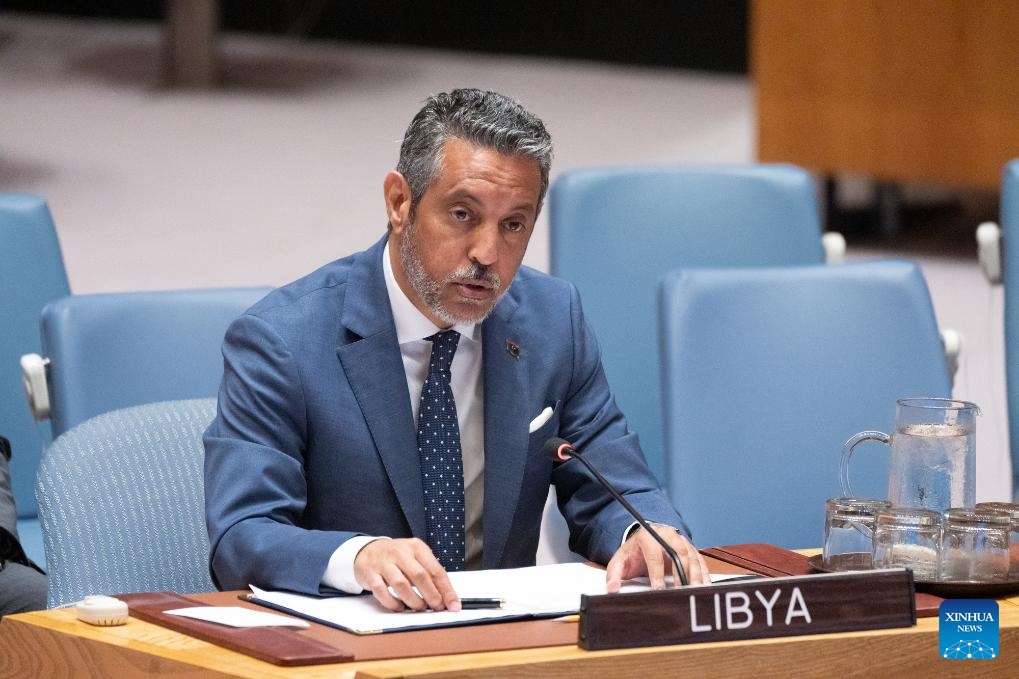
 The United Nations just issued a heartbreaking wake-up call to the rival leaders in Libya: Stop the violence against migrants. On February 17, the UN High Commissioner for Human Rights made it clear that the “detentions, beatings, and mass expulsions” aren’t just policy failures they are human rights catastrophes. These aren’t just numbers in a report; they are people being treated as disposable in a crisis that has become a dark stain on the Mediterranean. What unfolded in Libya is not simply a failure of Libyan governance; it is a symptom of a broader regional failure to provide opportunity and protection to a generation of young Africans. Thousands embark on perilous journeys through the Sahara and the Mediterranean each year, driven not by wanderlust but by a profound lack of economic prospects, political inclusion and human security at home. The abuses documented by the UN beatings, arbitrary detention and collective expulsion across the border into Niger are the tragic endpoint of a trajectory that begins in communities starved of jobs, services and hope.
Libya’s fractured political landscape split between rival governments in Tripoli and east of the country has created a lawless environment where traffickers, militias and opportunistic smuggling networks flourish. Migrants from across West and East Africa, many of them young and unemployed, find themselves trapped in detention centres or abandoned in the desert when crossings collapse or racketeers demand extortion.
UN human rights officials cited harrowing accounts of arbitrary round-ups and forced returns to Niger, where deported migrants face further hardship. These practices violate international law and have drawn condemnation from rights groups. The European Union and some member states have called on Libya’s authorities to adhere to basic protections, underscoring that the crisis is not solely Libyan but international in scope.
But focusing only on Libya’s conduct risks obscuring the root causes that send people on deadly journeys in the first place. At its core, the migration crisis now unfolding across North Africa and the Mediterranean is rooted in structural deprivation across many sub-Saharan countries: high youth unemployment, limited access to quality education and health care, faltering economic growth and persistent inequality.
For many Nigerians, Ghanaians, Malians and others who find themselves entrapped in Libya’s smuggling networks, departure is not an adventure, it is a decision borne of desperation. When a young graduate cannot secure formal employment, when government services are thin or absent, when climate shocks devastate livelihoods, the calculus becomes stark. The known dangers of Sahara crossings and Mediterranean waves can start to seem preferable to the slow grind of stagnation at home.
International admonitions to Libya aim to stem abuses, but they do little to address why migrants set out in the first place. Legal protections and humane treatment are necessary, but not sufficient, unless they are paired with sustainable development strategies that expand opportunity where people live.
Moving beyond the constant crisis mode at the Libyan border requires more than just taller fences; it requires building a foundation where staying home is a viable, attractive choice. To shift from simply reacting to disasters to actually preventing them, African governments and their global partners need a multi-layered game plan.
It’s about turning the page from “escaping a situation” to “building a future.” Here is how that looks in practice:
It’s a simple reality, if a young person can’t find a steady paycheck, they’ll look for one elsewhere. We need industrial policies that don’t just look good on paper but actually put boots on the ground. Investing in labor-heavy sectors like agro-processing, light manufacturing, and renewable energy and to absorb the millions of energetic young workers who are currently stuck in “survival mode” or underemployment. Having a degree shouldn’t be a dead end. Right now, there is a massive mismatch between what students learn and what the market actually needs, thus aligning vocational training and university curriculums with real-world market demands is essential.
Social pressure is a silent driver of migration. When a family is one medical bill away from ruin, the risk of a desert crossing starts to look like a gamble worth taking. Building robust social protection systems and offering a leg-up to young entrepreneurs.
At the end of the day, people leave when they feel their basic rights are being ignored. If you can’t get a house, see a doctor, or live without fear of discrimination, you’re going to look for the exit.
The UN’s call on Libya to protect migrants’ rights is urgent and justified. No person should be detained arbitrarily, beaten or turned back into a desert without basic protections. Yet, Libya is not the origin of the crisis; it is the amplifier. Without addressing the deeper issues in sending countries, economic stagnation, governance deficits and social exclusion similar crises will recur, even if Libya’s abuses are curtailed.
In this sense, Libya is a mirror reflecting the broader catalogue of governance and development challenges across the Sahel and West Africa. Policymakers in Abuja, Accra, Bamako and beyond must look not just at the coastline, but at the conditions that make perilous migration seem like a rational choice.
As 2026 progresses, international attention should follow the UN’s call for humane treatment in Libya with an equally sustained focus on building opportunity at home. That is the only way to ensure that Africans do not see the desert, the sea or foreign conflict as the only paths to survival or dignity.
In the words of one recently returned migrant, speaking from a transit camp: “We did not set out for danger. We set out because home offered none.” Until that fundamental truth is confronted, warnings alone will never be enough.