Viewpoints Africa
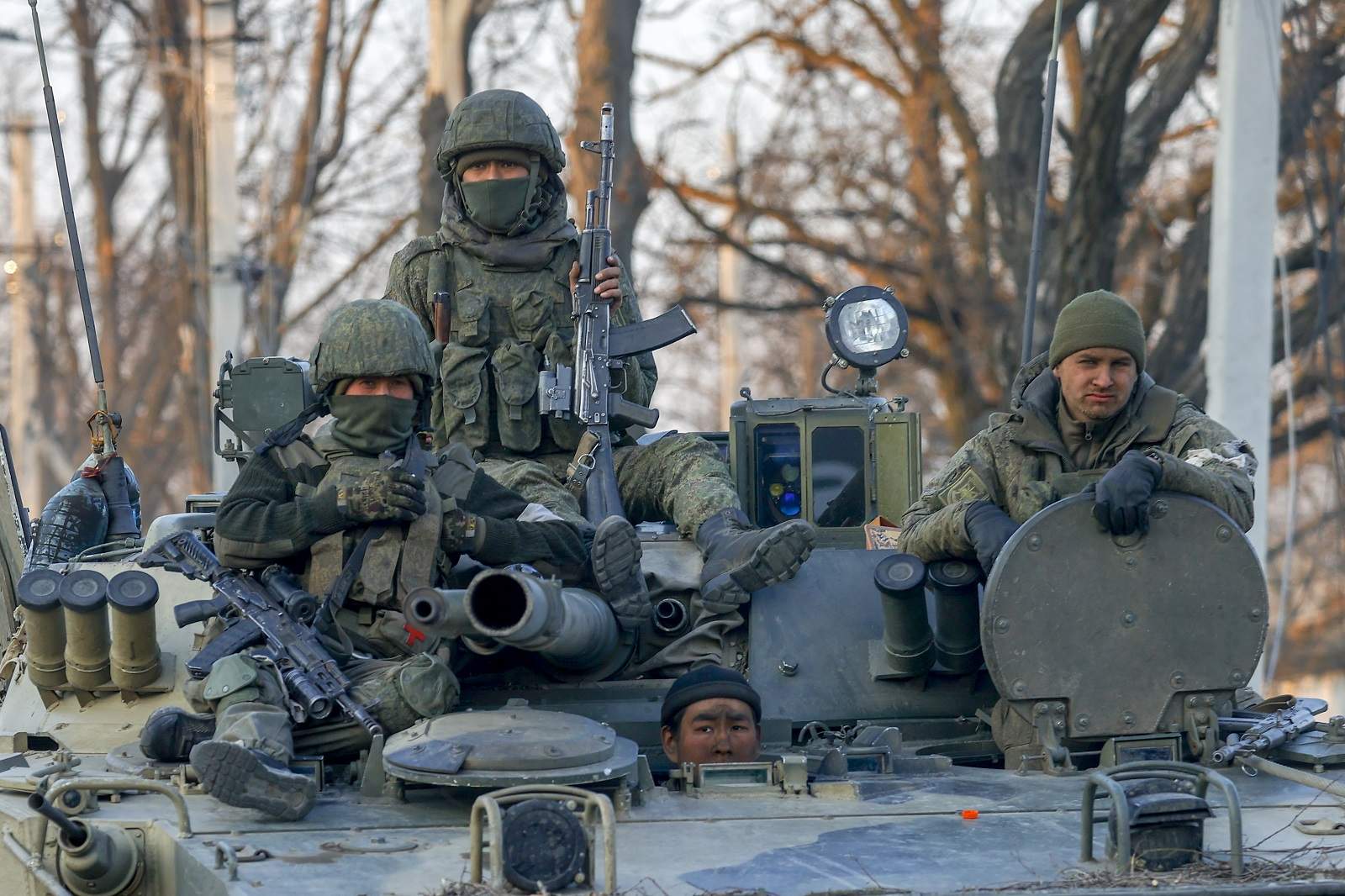
 Africa today carries a disproportionate share of the world’s violence. At any given time, the continent hosts more active conflict situations than any other region. According to the International Committee of the Red Cross, Africa accounts for more than 50 active armed conflicts, roughly 40 percent of all conflicts globally. Data from the Peace Research Institute Oslo shows that in 2023 alone, Africa recorded 28 state-based conflicts, more than Asia, the Middle East, Europe or the Americas. Over the past three decades, more than half of global conflict-related deaths have occurred on the continent. These are not abstract statistics. They represent the daily reality of millions of Africans across Sudan, the Sahel, eastern Congo, Somalia and northern Mozambique.
It was against this backdrop that the African Union Peace and Security Council was conceived. Yet two decades on, the PSC has struggled to prevent crises, contain escalation or enforce continental norms. Time and again, it has watched conflicts metastasise before issuing statements heavy with concern but light on consequence. It has responded to coups after they have already destabilised regions, tolerated insurgencies until they entrench themselves, and fallen back on consensus where urgency was required. Sovereignty has too often been treated as a shield for inaction rather than a responsibility to protect citizens. The result is a continental security architecture that appears institutionally present but politically constrained.
This failure is not measured only in lives lost. It is measured in broken economies and foreclosed futures. Conflict remains one of the most powerful structural brakes on Africa’s development. Countries mired in violence experience slower growth, capital flight, rising inflation and collapsing public services. Insecurity destroys infrastructure, empties classrooms, drains healthcare systems and forces millions out of productive work. In regions such as the Sahel and the Horn of Africa, conflict has erased development gains faster than aid programs can rebuild them. No serious conversation about Africa’s prosperity can ignore the centrality of peace. Progress is not possible in its absence.
Peace is economic infrastructure. It is the precondition for industrialisation, regional trade, energy investment and job creation. The African Continental Free Trade Area cannot function where borders are unstable and transport corridors unsafe. Investors do not commit long-term capital to regions where armed groups can sever supply chains overnight. A continent that hosts nearly half of the world’s conflicts cannot credibly plan for sustained growth while treating security reform as peripheral.
If Africa is serious about breaking this cycle, the Peace and Security Council must be rebuilt into a body capable of acting early, decisively and enforceably. While many of these challenges have been discussed in academic and policy circles, Africa has yet to translate diagnosis into institutional redesign. The PSC’s shortcomings are well known; what is missing is the political will to restructure power, financing and authority in ways that match the scale of the crisis. Reform, therefore, cannot be incremental or cosmetic. It must confront difficult truths about who leads, who pays and who enforces peace on the continent.
Firstly, the PSC must abandon the fiction that all member states exert equal security weight. Africa already has regional anchors that shoulder disproportionate responsibility for security and diplomacy. This reality should be reflected institutionally, but in ways that avoid reproducing the paralysis of the United Nations Security Council. Permanent representation should be organised on a regional rather than national basis, with regions nominating long-term representatives based on clear criteria such as financial contribution, troop deployment, democratic governance and diplomatic capacity. Crucially, these roles must be time-bound and subject to review. Power cannot be permanent and unconditional. The protocol establishing the PSC must be amended to recognise regional leadership while guarding against entitlement and capture.
Secondly, Africa must end the fiction that it can build a credible peace and security architecture while relying heavily on external donors. A council that depends on others to finance African peace cannot act with either urgency or autonomy. The AU Peace Fund must become a genuinely African-owned instrument, supported by mandatory levies dedicated exclusively to conflict prevention and peace operations. Member states that default on their obligations should face automatic institutional penalties, while compliance should carry influence and credibility. Preventing conflict is far cheaper than rebuilding societies after war. This is not a moral argument alone; it is a fiscal one. The legal framework governing the Peace Fund requires strengthening to ringfence contributions and insulate peace financing from political bargaining.
Thirdly, the Peace and Security Council must move from persuasion to authority. Its resolutions must be binding, with clear consequences for non-compliance. At present, the Council too often relies on consensus precisely when firmness is required. Member states should be required to domesticate PSC decisions on sanctions, arms embargoes and travel bans through national enabling legislation. The African Union’s Constitutive Act, particularly its intervention provisions, should be clarified to remove ambiguity about collective enforcement. A predictable escalation framework is essential, moving deliberately from diplomacy to targeted sanctions, coordinated law enforcement action and, where necessary, military intervention.
Fourthly, the African Standby Force must finally become operational in more than name. Rapid deployment must mean days, not months. This requires a standing core capacity, unified command structures and pre-agreed rules of engagement. The persistent gap between AU mandates and regional force mobilisation has repeatedly undermined timely response. Institutional integration, not rivalry, must define the relationship between the AU and regional security mechanisms. The doctrines governing peace support operations already exist; what has been lacking is implementation.
Finally, conflict prevention must become the default instinct of Africa’s security system rather than its rhetorical aspiration. Early warning without early action serves little purpose. The Continental Early Warning System should have authority to trigger mandatory PSC deliberation, and the AU Commission Chairperson must be empowered to initiate preventive diplomacy before crises spiral beyond control. Civil society expertise and independent analysis should be embedded in decision-making, not consulted after failures have already occurred.
Reforming the Peace and Security Council is not about militarising African governance. It is about recognising a basic reality. Peace is the foundation upon which prosperity is built. A continent that hosts 40 percent of the world’s conflicts cannot afford a security council designed primarily to avoid offending governments. Without a credible architecture for prevention and enforcement, Africa’s ambitions for growth, integration and global relevance will remain fragile and largely aspirational.
The choice confronting African leaders is stark. Either the PSC is empowered to act early and decisively, or Africa continues to pay the price of endless instability in lost lives, lost investment and lost futures. The question is no longer whether reform is needed. It is whether the political will exists to make peace an enforceable continental priority.
History will be unforgiving to half-measures. Africa does not suffer from a deficit of frameworks or communiqués; it suffers from institutions designed to observe failure rather than interrupt it. A reconstituted Peace and Security Council, armed with authority, legitimacy and means, would signal a decisive break from managed decline toward deliberate stability. The costs of inaction are already visible across the continent. The dividends of courage would be too.
Abayomi Ojo is a change management consultant and can be reached at samyom5@yahoo.com